Elite Networks: The Political Economy of Inequality
0
0
As an Amazon Associate and affiliate partner, Menrva Books earns from qualifying purchases. Learn more
Author Description
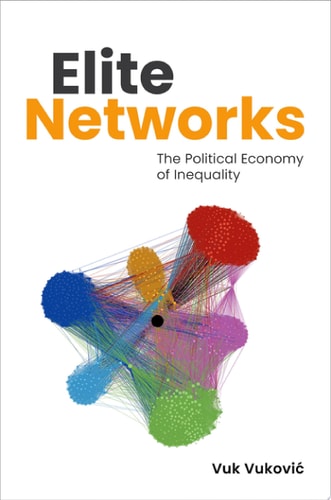
Elite Networks Presents A Novel Explanatory Factor Behind The Rise And Persistence Of Income Inequality: Extractive Political Power. It Shows How The Collusion Between Political And Corporate Power Affects The Distribution Of Incomes. Its Most Important Goal Is To Offer A Novel Perspective On The Long-run Origins Of Inequality By Introducing The Concept Of Elite Networks And Examining Their Effects On The Distribution Of Power And Incomes. Elite Networks Are Informal Social Networks Between Politicians In Power And Top Executives Of Politically Connected Firms Where Personal Ties And Long-term Interactions Build Trust And Loyalty Between Involved Actors. Both Groups Draw Benefits From These Interactions. Politicians Stay In Power And May Extract Bribes And Other Favours, While Firms Are Rewarded With Exclusive Government Contracts, Favourable Regulation, And Direct Subsidies. Top Corporate Executives That Are Successful In Acquiring These Rents As A Consequence Of Their Elite Network Interactions Are Rewarded By Their Firms With Higher Salaries. This Consequentially Widens The Dispersion Of Earnings Between The Top 1% Of Income Earners (most Of Which Are Corporate Executives) And Everyone Else. The Book Recognizes That The Long-run Forces Behind Inequality Were Always Rooted In Centralized And Extractive Political Power, Generated Via Specific Relationships Between The Society's Elites. Centralization Of Power Enables The Network Effect That Creates Elite Networks, Which Encourage Rent-seeking Opportunities To Its Members, Consequentially Increasing Inequality. Inequality Is Not A Modern Nor A Natural Phenomenon, But A Man-made Phenomenon Rooted Deeply Within The, Often Violent, Quest For Political Power
Menrva's Summary
THE THESIS
This book investigates how informal social networks between political leaders and corporate executives function as a primary driver of income inequality. Vuk Vuković, a political economist, utilizes a framework of rent-seeking and power centralization to explain the persistence of wealth gaps. By analyzing the symbiotic relationship between state actors and private firms, the author argues that inequality is a deliberate, man-made outcome of extractive political systems rather than a natural market phenomenon.
THE SCOPE MAP
What You Will Find
- A theoretical framework defining elite networks as informal conduits for political and corporate collusion.
- Analysis of rent-seeking mechanisms, including government contracts, favorable regulations, and direct subsidies.
- Examination of the causal link between executive compensation and political connectivity.
- Historical and structural perspectives on how centralized power enables the extraction of wealth by the top 1%.
THE AUTHORITY PERSPECTIVE
Experts identify this work as a significant contribution to the study of political economy and the structural origins of wealth disparity. Readers frequently note the clarity with which the author connects abstract political power to tangible economic outcomes for high-level earners.
Page Count:
384
Publication Date:
2024-05-03
Publisher:
Oxford University Press
ISBN-10:
0197774229
ISBN-13:
9780197774229
Politics
Economics
Specific Topics
Sociology
Class
Inequality
Economic History
Community Tags
Similar Books