Reform and Retrenchment: A Century of Efforts to Fix Primary Elections
0
0
As an Amazon Associate and affiliate partner, Menrva Books earns from qualifying purchases. Learn more
Author Description
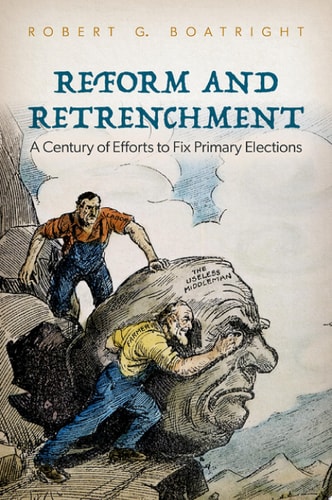
The direct primary, in which voters rather than party leaders or convention delegates select party nominees for state and federal offices, was one of the most widely adopted political reforms of the early twentieth century. Yet after decades of practice and study, scholars have found little clear evidence that direct primaries changed the outcomes of party nominations. The conventional wisdom has always been that once the Progressive movement declined and voters became distracted by more pressing issues, parties slowly reasserted their control over candidate selection. This book shows that the conventional wisdom is wrong.Exploring changes in American primary election laws from the 1920s to the 1970s, Robert G. Boatright argues in Reform and Retrenchment that the introduction of the direct primary created far more chaos in American elections than most scholars realize. As he shows, political parties, factions, and reform groups manipulated primary election laws in order to gain an advantage over their opponents, often under the guise of enhancing democracy. Today there is widespread dissatisfaction with primaries, and we are again in a period of experimentation. Boatright looks at how this history can help us understand the reform ideas before us today, ultimately suggesting that, for all of its flaws, there is likely little that can be done to improve primaries, and those who would seek to change American politics are best off exploring reforms to other areas of elections and governance.
Menrva's Summary
THE THESIS
This book investigates whether the direct primary system has successfully achieved its democratic goals or if it has merely served as a tool for political manipulation over the last century. Robert G. Boatright, a scholar of American politics, utilizes historical election data and legislative records from the 1920s through the 1970s to challenge the conventional narrative that party control simply reasserted itself after the Progressive era. He argues that the primary system introduced significant instability into the American electoral process, as various factions frequently altered election laws to secure partisan advantages under the pretense of reform.
THE SCOPE MAP
What You Will Find
- A historical analysis of American primary election laws spanning from the 1920s to the 1970s.
- An examination of how political parties and factions manipulate election regulations for strategic gain.
- Case studies illustrating the disconnect between the stated goals of democratic reform and the actual outcomes of primary elections.
- A critical assessment of contemporary reform proposals and the limitations of attempting to fix the primary system.
THE AUTHORITY PERSPECTIVE
Experts in political science recognize this work as a significant contribution to the study of American electoral institutions and the history of party politics. Readers frequently note the academic rigor of the text, which provides a sobering perspective on the efficacy of institutional reform in the United States.
Page Count:
344
Publication Date:
2024-05-07
Publisher:
Oxford University Press
ISBN-10:
0197774083
ISBN-13:
9780197774083
Politics
Elections & Political Process
Elections
American History
Government
Public Policy
Community Tags
Similar Books