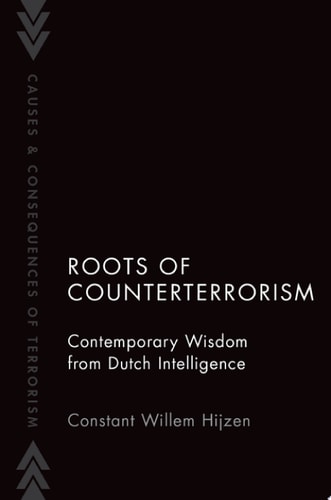
Roots of Counterterrorism: Contemporary Wisdom from Dutch Intelligence
0
0
As an Amazon Associate and affiliate partner, Menrva Books earns from qualifying purchases. Learn more
Author Description
The dominant narrative in intelligence studies portrays the evolution of intelligence from Cold War times to the present as one of increasing complexity. But Western intelligence and security services have countered terrorism before: terrorism became an important threat from the end of the 1960s onwards. Counterterrorism efforts before 9/11, however, differed from those employed post-9/11, not only in the way threats were perceived, but also in the repertoires of action that emerged to counter them.Using newly declassified primary sources, Roots of Counterterrorism puts into focus how the rise of terrorism in the 1970s challenged the existing perceived core functions of intelligence, specifically in the Netherlands. Constant Willem Hijzen analyses how the Dutch domestic security service Binnenlandse Veiligheidsdienst (BVD) scrutinized traces of terrorism from 1968, when Spanish anarchists bombed embassies in The Hague, until the South Moluccan attack of 1978, after which the threat of terrorism and political violence diminished. Unlike counterterrorism in the post-9/11 era, prevention was not the primary goal. Instead, the Dutch security service launched intelligence investigations into the suspected perpetrators of attacks, provided hands-on assistance during terrorist incidents, and advised the police and the Justice department.Roots of Counterterrorism sheds new light on Dutch intelligence history, but also on the dynamics of international intelligence cooperation, operational complexities, and more fundamental questions in intelligence and security studies about the essence and evolution of intelligence and intelligence organizations.
Menrva's Summary
THE THESIS
This book investigates how the emergence of terrorism in the 1970s forced a fundamental shift in the operational functions and strategic priorities of the Dutch domestic security service. Constant Willem Hijzen, a scholar of intelligence history, utilizes newly declassified primary sources to reconstruct the BVD's response to political violence between 1968 and 1978. By contrasting these historical methods with post-9/11 counterterrorism paradigms, the author argues that early efforts focused on reactive investigation and inter-agency support rather than the preventative models dominant today.
THE SCOPE MAP
What You Will Find
- Historical analysis of the BVD's operational response to terrorism from 1968 to 1978.
- Examination of specific incidents including the 1968 embassy bombings and the 1978 South Moluccan attacks.
- Primary source research derived from newly declassified Dutch intelligence archives.
- Comparative framework contrasting Cold War-era intelligence repertoires with contemporary security practices.
THE AUTHORITY PERSPECTIVE
Experts recognize this work as a significant contribution to the historiography of European intelligence services. Scholars frequently highlight the text for its rigorous use of primary source material to challenge existing assumptions about the evolution of modern counterterrorism strategies.
Page Count:
408
Publication Date:
2024-11-05
Publisher:
Oxford University Press
ISBN-10:
0197786049
ISBN-13:
9780197786048
History
Politics
Terrorism
Specific Topics
Security Studies
European History
Counseling Psychology
Community Tags
Other Editions(2)

Similar Books