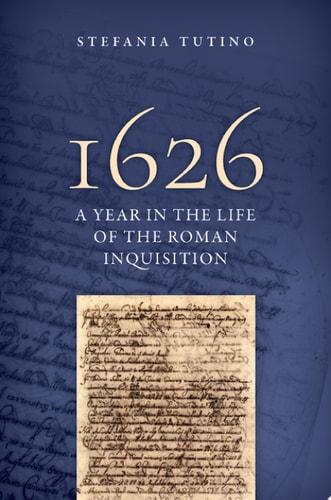
1626: A Year in the Life of the Roman Inquisition
0
0
As an Amazon Associate and affiliate partner, Menrva Books earns from qualifying purchases. Learn more
Author Description
This Book Examines All The Activities Carried Out By The Roman Inquisition (including Both The Roman And The Local Tribunals) In The Year 1626. Its Main Argument Is That The Early Seventeenth-century Roman Inquisition Was Not Solely The Expression Of The Most Militant And Repressive Aspects Of Post-reformation Catholicism. Rather, To Understand The Historical Role The Holy Office Played We Need To See Its Development In Terms Of The Tension Between Rigidity On The One Hand, And Flexibility And Complexity On The Other. The Mandate Of The Holy Office Was To Defend And Impose Catholic Doctrine By Identifying And Punishing Deviations: There Could Be Absolutely No Room For Flexibility When It Came To Upholding Catholic Theological Rules. The World That Roman Inquisitors Oversaw, By Contrast, Was Characterized By A High Degree Of Complexity. Roman Inquisitors Did Not Ignore Such Complexity; Rather, They Acknowledged It, Occasionally Came To Terms With It, And Indeed Absorbed It In Some Measure. But To What Extent Could The Holy Office Relax Its Rigidity Before It Became Unable To Fulfill The Functions For Which It Was Created In The First Place? At What Point Did An Increased Complexity Hinder, Rather Than Aid, The Goal Of Monitoring And Controlling The Catholic World? Having The Opportunity To See All The Activities Of The Holy Office In One Entire Year Makes The Centrality Of These Questions Easier To Appreciate Than If We Just Focused On A Specific And Necessarily Limited Subset Of Issues. Conversely, The Granular Analysis Of Those Activities Provided In This Book Gives A Concrete Sense Of The Ways In Which The Tension Between Flexibility And Rigidity Manifested-- Provided By Publisher.
Menrva's Summary
THE THESIS
This book investigates the operational reality of the Roman Inquisition in 1626 to determine how the institution balanced its rigid theological mandate with the inherent complexities of the seventeenth-century Catholic world. Stefania Tutino, a historian specializing in early modern religious history, utilizes a comprehensive analysis of the Holy Office's activities over a single calendar year to challenge the perception of the Inquisition as a purely repressive entity. By examining both central Roman and local tribunals, the author argues that the institution navigated a constant, functional tension between doctrinal rigidity and the pragmatic flexibility required to govern a diverse and complex society.
THE SCOPE MAP
What You Will Find
- A granular examination of all recorded activities of the Roman Inquisition during the year 1626.
- A comparative analysis of central Roman tribunal procedures versus local inquisitorial practices.
- An exploration of the institutional mechanisms used to identify and punish theological deviations.
- A theoretical framework assessing the limits of institutional flexibility in the face of doctrinal enforcement.
THE AUTHORITY PERSPECTIVE
Historians and scholars of the Counter-Reformation identify this work as a significant contribution to understanding the administrative and practical nuances of the Holy Office. Readers frequently note the academic density of the prose, which provides a rigorous, evidence-based look at institutional governance rather than a generalized historical overview.
Page Count:
448
Publication Date:
2025-01-01
Publisher:
Oxford University Press, Incorporated
ISBN-10:
0197806856
ISBN-13:
9780197806852
History
European History
Inquisition
Religious History
Catholicism
Community Tags
Similar Books