Arguing the Apocalypse: A Theory of Millennial Rhetoric
0
0
As an Amazon Associate and affiliate partner, Menrva Books earns from qualifying purchases. Learn more
Author Description
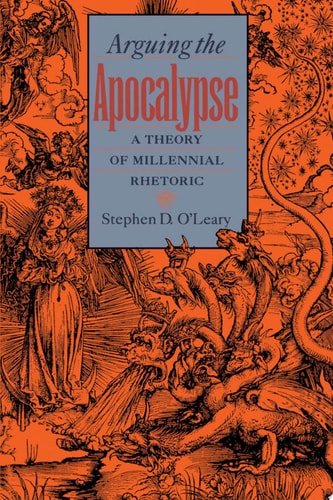
Apocalyptic expectations of Armageddon and a New Age have been a fixture of the American cultural landscape for centuries. With the year 2000 fast approaching, such millennial visions are becoming increasingly popular. In Arguing the Apocalypse Stephen O'Leary sheds new light on the age-old fascination with the End of the Age by proposing a rhetorical explanation for the widespread appeal of millennialism. Using examples of apocalyptic argument from ancient to modern times, O'Leary identifies the recurring patterns in apocalyptic texts and movements and shows how and why the New Testament Apocalypse has been used to support a variety of political stances and programs. Looking at works as diverse as William Miller's nineteenth-century lectures and Hal Lindsey's bestsellers, he probes the apparently fundamental human need to view history as symbolic drama - either comic or tragic. The book concludes with a critical review of the recent appearances of doomsday scenarios in our politics and culture, and a meditation on the significance of the Apocalypse in the nuclear age. Arguing the Apocalypse is the most thorough examination of its subject to date: a study of a neglected chapter of our religious and cultural history, a guide to the politics of Armageddon, and a map of millennial consciousness. It will be of keen interest to scholars and students in numerous fields, including the history of religion, biblical criticism, rhetoric, communications, philosophy, political science, sociology, anthropology, and literary criticism, as well as anyone intrigued by doomsday politics.
Menrva's Summary
THE THESIS
This book investigates the rhetorical mechanisms that allow apocalyptic narratives to persist and adapt within American cultural and political discourse. Stephen D. O'Leary, a scholar in communication and rhetoric, utilizes a framework of symbolic analysis to examine how millennial expectations function as a form of historical drama. By analyzing texts ranging from ancient scripture to modern political manifestos, he argues that the human need to frame history as a coherent, symbolic narrative drives the enduring appeal of doomsday scenarios.
THE SCOPE MAP
What You Will Find
- Historical analysis of apocalyptic rhetoric from ancient texts to the nuclear age.
- A rhetorical framework for identifying recurring patterns in millennial movements.
- Case studies including William Miller’s nineteenth-century lectures and Hal Lindsey’s contemporary works.
- An examination of how religious prophecy is repurposed to support diverse political agendas.
THE AUTHORITY PERSPECTIVE
Scholars and students in fields such as religious studies, political science, and communications frequently cite this work as a foundational text for understanding the intersection of prophecy and public discourse. Readers often note the academic density of the prose, which provides a rigorous, systematic approach to a subject that is often treated with sensationalism.
Page Count:
0
Publication Date:
1900-01-01
Publisher:
Oxford University Press
ISBN-10:
0198024223
ISBN-13:
9780198024224
History
Religion
Rhetoric
Sociology
Community Tags
Other Editions(3)

Similar Books

Reader Comments
Share Your Thoughts
No comments yet. Be the first to share your thoughts!