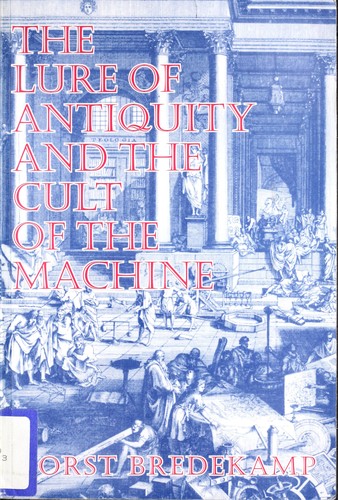
The Lure of Antiquity and the Cult of the Machine
0
0
As an Amazon Associate and affiliate partner, Menrva Books earns from qualifying purchases. Learn more
Author Description
The Kunstkammer was a programmatic display of art and oddities amassed by wealthy Europeans during the sixteenth to the eighteenth centuries. These nascent museums reflected the ambitions of such thinkers as Descartes, Locke, and Kepler to unite the forces of nature with art and technology. The bizarre inventory of the Kunstkammer - ranging from minerals to exotic plants and animals, statues, and machines - was intended to illustrate the mechanistic order of the universe. Such collections confirmed a belief in the continual evolution of man's god-like power of creativity. Bredekamp advances a radical view that the baroque Kunstkammer is also the nucleus of modern cyberspace.
Menrva's Summary
THE THESIS
The Kunstkammer, a collection of art and oddities from the 16th to 18th centuries, served as a microcosm of the universe, reflecting a belief in the mechanistic order and humanity's creative power. Wealthy Europeans amassed these nascent museums, which included everything from minerals and exotic specimens to statues and machines, aiming to illustrate the universe's order and man's god-like creativity. Thinkers like Descartes, Locke, and Kepler saw these collections as a means to unite nature, art, and technology. Bredekamp posits a provocative argument that these baroque cabinets of curiosity are, in fact, the precursors to modern cyberspace.
THE SCOPE MAP
- The historical context and purpose of the Kunstkammer in early modern Europe.
- The philosophical underpinnings of these collections, referencing thinkers like Descartes, Locke, and Kepler.
- The diverse and often bizarre inventory of items found within Kunstkammers.
- The symbolic representation of the universe's mechanistic order through these collections.
- The confirmation of a belief in human creativity and its god-like potential.
- Bredekamp's central thesis connecting the Kunstkammer to the origins of cyberspace.
THE AUTHORITY PERSPECTIVE
Horst Bredekamp's work offers a radical reinterpretation of the Kunstkammer, challenging traditional understandings of these early collections. The book's argument that these historical cabinets of curiosity foreshadow modern digital spaces is likely to provoke discussion among art historians, historians of science, and cultural theorists. The detailed examination of the collections' contents and their philosophical context provides a rich foundation for this innovative thesis. This perspective suggests the book is a significant contribution to understanding the evolution of human knowledge and technological imagination.
Page Count:
140
Publication Date:
1995-01-01
ISBN-10:
1558760938
History
Non-Fiction
Art
Cultural History
Museum Studies
Art History
Community Tags
Similar Books














