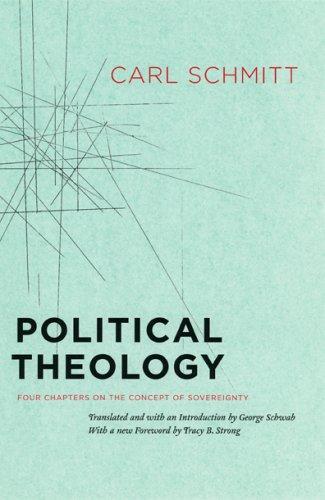
Political Theology
0
0
As an Amazon Associate and affiliate partner, Menrva Books earns from qualifying purchases. Learn more
Author Description
Written in the intense political and intellectual tumult of the early years of the Weimar Republic, Political Theology develops the distinctive theory of sovereignty that made Carl Schmitt one of the most significant and controversial political theorists of the twentieth century. Focusing on the relationships among political leadership, the norms of the legal order, and the state of political emergency, Schmitt argues in Political Theology that legal order ultimately rests upon the decisions of the sovereign. According to Schmitt, only the sovereign can meet the needs of an "exceptional" time and transcend legal order so that order can then be reestablished. Convinced that the state is governed by the ever-present possibility of conflict, Schmitt theorizes that the state exists only to maintain its integrity in order to ensure order and stability. Suggesting that all concepts of modern political thought are secularized theological concepts, Schmitt concludes Political Theology with a critique of liberalism and its attempt to depoliticize political thought by avoiding fundamental political decisions.
Menrva's Summary
THE THESIS
The central question of this work is the nature of sovereignty and its relationship to the state of exception. Carl Schmitt, a highly influential and controversial political theorist, examines how legal order is ultimately dependent on the decisions of a sovereign power. He posits that only a sovereign can effectively manage times of political crisis and reestablish order by transcending existing legal frameworks. Schmitt argues that the state's primary function is to maintain its integrity and ensure stability, driven by the inherent possibility of conflict.
THE SCOPE MAP
- Analysis of the concept of sovereignty in modern political thought.
- Exploration of the relationship between legal order and the state of political emergency.
- Schmitt's theory on the sovereign's role in transcending legal norms.
- Critique of liberalism and its attempts to depoliticize political decision-making.
- Examination of secularized theological concepts within modern political thought.
THE AUTHORITY PERSPECTIVE
Carl Schmitt's "Political Theology" is a foundational text in 20th-century political theory, known for its provocative arguments on sovereignty and the state of exception. The work has been widely debated and analyzed for its insights into the nature of political power and decision-making. Critics often highlight its intellectual rigor and its challenge to liberal political thought, while others point to its controversial author and potential implications. The book continues to be a subject of intense scholarly discussion regarding the ultimate basis of political authority.
Page Count:
70
Publication Date:
2005-01-01
ISBN-10:
0226738892
ISBN-13:
9780226738895
Science
Politics
Philosophy
Non-Fiction
Religion
Political Theory
Sovereignty
Legal Theory
Community Tags
Similar Books