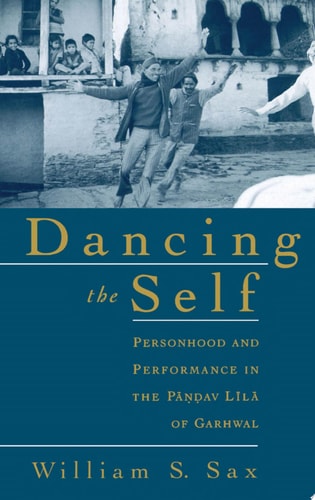
Dancing the Self: Personhood and Performance in the Pandav Lila of Garhwal
0
0
As an Amazon Associate and affiliate partner, Menrva Books earns from qualifying purchases. Learn more
Author Description
For ten years, William Sax studied the inhabitants of the former kingdom of Garhwal in northern India. Sax attended and participated in performances of the pandav lila (a ritual reenactment of scenes from the Mahabharata in a dance) and observed its context in village life. Combining ethnographic fieldwork with sophisticated reflection on the larger meanings of these rituals and practices, this volume presents the information in a style accessible to the uninitiated reader. Sax opens a window on a fascinating (and threatened) aspect of rural Indian life and on Hinduism as a living religion, while providing an accessible introduction to the Mahabharata itself.
Menrva's Summary
THE THESIS
This work investigates how the ritual performance of the Pandav Lila in Garhwal, India, constructs and expresses the concept of personhood within a living religious tradition. William S. Sax, an anthropologist with extensive field experience, utilizes ten years of participant observation to analyze the intersection of myth, dance, and village social structure. By examining the reenactment of the Mahabharata, the author argues that these performances serve as a vital mechanism for villagers to negotiate their identities and maintain cultural continuity in a changing landscape.
THE SCOPE MAP
What You Will Find
- Detailed ethnographic documentation of the Pandav Lila ritual performances in Garhwal.
- Analysis of the relationship between the Mahabharata epic and contemporary rural Indian social life.
- Theoretical frameworks regarding the construction of the self through performative religious practice.
- Observations on the preservation and potential decline of traditional ritual practices in modernizing societies.
THE AUTHORITY PERSPECTIVE
Scholars and anthropologists frequently cite this work as a significant contribution to the study of South Asian ritual performance and the anthropology of religion. Readers often note the balance between rigorous academic inquiry and the accessible prose style that makes complex cultural phenomena understandable to a broader audience.
Page Count:
240
Publication Date:
2002-01-01
Publisher:
Oxford University Press
ISBN-10:
0198031874
ISBN-13:
9780198031871
Religion
Hinduism
Anthropology
Ethnography
Performance Studies
India
Dance india
Community Tags
Similar Books