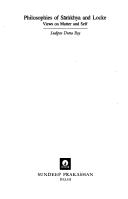
Philosophies of Sāṅkhya and Locke
0
0
As an Amazon Associate and affiliate partner, Menrva Books earns from qualifying purchases. Learn more
Author Description
Study of philosophy of self in Sāṅkhyakārikā by Īśvarakr̥ṣṇa and Essay concerning human understanding by John Locke, 1632-1704.
Menrva's Summary
THE THESIS
This book investigates the philosophical concepts of the self as presented in two distinct traditions: the ancient Indian Sāṅkhyakārikā and John Locke's empirical philosophy. It examines the Sāṅkhya system, particularly as articulated by Īśvarakṛṣṇa, and contrasts it with Locke's seminal work, 'An Essay Concerning Human Understanding.' The study aims to draw parallels and distinctions between these foundational texts on epistemology and the nature of the self.
THE SCOPE MAP
- Analysis of the Sāṅkhyakārikā by Īśvarakṛṣṇa.
- Examination of John Locke's 'An Essay Concerning Human Understanding'.
- Comparative study of the concept of self in Indian and Western philosophy.
- Exploration of epistemological frameworks in both traditions.
- Discussion of the historical context and influence of each philosophical work.
THE AUTHORITY PERSPECTIVE
This comparative philosophical study likely appeals to scholars and students interested in the foundational concepts of selfhood across different intellectual traditions. The juxtaposition of ancient Indian thought with Enlightenment empiricism suggests a text that facilitates a deeper understanding of both systems by highlighting their unique approaches to consciousness and identity. The work's focus on seminal texts indicates a scholarly, analytical tone, aiming to illuminate the core arguments and divergences between Sāṅkhya and Lockean philosophy.
Page Count:
128
Publication Date:
2006-01-01
ISBN-10:
817574166X
Non-Fiction
Philosophy
Comparative Philosophy
Indian philosophy
Western philosophy
Community Tags
Similar Books