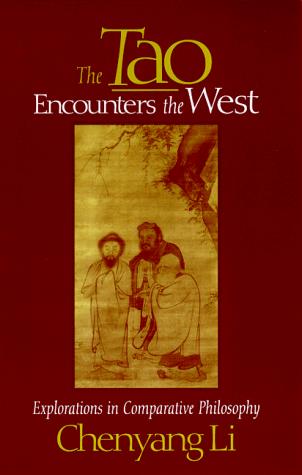
The Tao Encounters the West
0
0
As an Amazon Associate and affiliate partner, Menrva Books earns from qualifying purchases. Learn more
Author Description
The relation between liberal democracy and Confucianism is explored by author Chenyang Li as he argues for a Chinese future where both coexist as independent value systems. This relationship is shown through a comparative study of Chinese and Western ideas and philosophies of being, truth, language, ethics, religion, and values. The book covers a wide range of philosophers and philosophies, including Aristotle, Zhuang Zi, Heidegger, Confucius, Kripke, and feminist care ethics. Li shows how a comparative approach to different patterns of thinking in Chinese and Western traditions sheds light on the intelligibility of Chinese multiple ethico-religious practice, which in turn supports the claim that democracy and Confucianism can coexist as independent value systems.
Menrva's Summary
THE THESIS
The book investigates the potential for coexistence between liberal democracy and Confucianism within a future Chinese society. Chenyang Li argues that these two distinct value systems can exist independently by examining their relationship through a comparative study of Chinese and Western philosophical traditions. The analysis spans fundamental concepts such as being, truth, language, ethics, religion, and values, drawing upon a diverse array of thinkers from both traditions, including Aristotle, Zhuang Zi, Heidegger, Confucius, and Kripke. By highlighting how a comparative approach illuminates the intelligibility of Chinese ethico-religious practices, the book supports its central claim of potential coexistence.
THE SCOPE MAP
- Comparative study of Chinese and Western philosophical traditions.
- Exploration of concepts: being, truth, language, ethics, religion, and values.
- Analysis of philosophers including Aristotle, Zhuang Zi, Heidegger, Confucius, and Kripke.
- Examination of feminist care ethics.
- Argument for the coexistence of liberal democracy and Confucianism.
- Focus on Chinese ethico-religious practices.
- Discussion of independent value systems.
THE AUTHORITY PERSPECTIVE
The book is presented as a scholarly exploration of the intersection between Eastern and Western philosophical thought, specifically focusing on the compatibility of Confucianism and liberal democracy. The author's comparative approach, drawing on a wide range of philosophers, suggests a text aimed at an academic audience interested in political philosophy and comparative studies. The framing indicates a detailed analysis of ethical and religious frameworks, likely offering nuanced arguments for readers engaged with these complex traditions.
Page Count:
234
Publication Date:
1999-01-01
ISBN-10:
0791441350
Politics
Non-Fiction
Philosophy
Religion
Western philosophy
Ethics
Chinese Philosophy
Comparative Philosophy
Community Tags
Similar Books