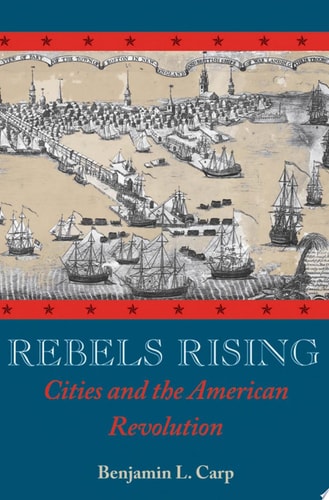
Rebels Rising
0
0
As an Amazon Associate and affiliate partner, Menrva Books earns from qualifying purchases. Learn more
Author Description
The Cities Of Eighteenth-century America Packed Together Tens Of Thousands Of Colonists, Who Met Each Other In Back Rooms And Plotted Political Tactics, Debated The Issues Of The Day In Taverns, And Mingled Together On The Wharves Or In The Streets. In This Fascinating Work, Historian Benjamin L. Carp Shows How These Various Urban Meeting Places Provided The Tinder And Spark For The American Revolution. Carp Focuses Closely On Political Activity In Colonial America's Five Most Populous Cities--in Particular, He Examines Boston's Waterfront Community, New York Tavern-goers, Newport Congregations, Charleston's Elite Patriarchy, And The Common People Who Gathered Outside Philadelphia's State House. He Shows How--because Of Their Tight Concentrations Of People And Diverse Mixture Of Inhabitants--the Largest Cities Offered Fertile Ground For Political Consciousness, Political Persuasion, And Political Action. The Book Traces How Everyday Interactions In Taverns, Wharves, And Elsewhere Slowly Developed Into More Serious Political Activity. Ultimately, The Residents Of Cities Became The First To Voice Their Discontent. Merchants Began Meeting To Discuss The Repercussions Of New Laws, Printers Fired Up Provocative Pamphlets, And Protesters Took To The Streets. Indeed, The Cities Became The Flashpoints For Legislative Protests, Committee Meetings, Massive Outdoor Gatherings, Newspaper Harangues, Boycotts, Customs Evasion, Violence And Riots--all Of Which Laid The Groundwork For War. Ranging From 1740 To 1780, This Groundbreaking Work Contributes Significantly To Our Understanding Of The American Revolution. By Focusing On Some Of The Most Pivotal Events Of The Eighteenth Century As They Unfolded In The Most Dynamic Places In America, This Book Illuminates How City Dwellers Joined In Various Forms Of Political Activity That Helped Make The Revolution Possible.
Menrva's Summary
THE THESIS
This work investigates how the specific urban environments of eighteenth-century American cities served as the primary catalysts for the political mobilization that ignited the American Revolution. Historian Benjamin L. Carp utilizes a comparative analysis of five major colonial cities to argue that the physical density and social diversity of these urban centers created unique spaces for political discourse and action. By examining the intersection of geography and ideology, Carp demonstrates how everyday interactions in public spaces transformed into organized resistance against British rule. The author draws upon extensive primary source research to map the evolution of political consciousness from local grievances to widespread revolutionary fervor.
THE SCOPE MAP
What You Will Find
- A comparative study of political activity in Boston, New York, Newport, Charleston, and Philadelphia between 1740 and 1780.
- Analysis of the role of specific urban venues such as taverns, wharves, and meeting houses in fostering political organization.
- Examination of diverse social strata, ranging from elite patriarchs to common laborers and printers.
- Documentation of protest methods including boycotts, customs evasion, and public demonstrations that preceded the outbreak of war.
THE AUTHORITY PERSPECTIVE
Historians and scholars frequently cite this work as a significant contribution to the study of urban political culture during the colonial era. Readers often note the meticulous detail with which the author reconstructs the social geography of eighteenth-century American cities.
Page Count:
352
Publication Date:
2007-01-01
Publisher:
Oxford University Press
ISBN-10:
0198041322
ISBN-13:
9780198041320
History
Urban Studies
American History
Revolutionary War
Community Tags
Similar Books