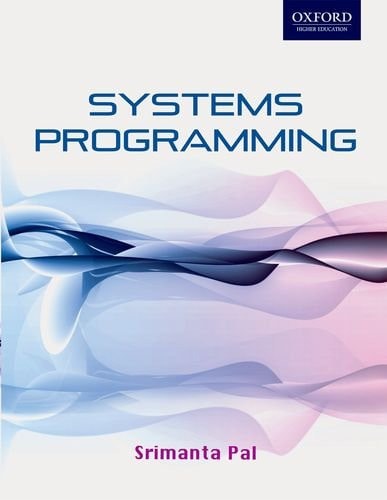
Systems Programming
0
0
As an Amazon Associate and affiliate partner, Menrva Books earns from qualifying purchases. Learn more
Author Description
The book is divided into five parts. The first chapters explore the scope of the subject and the first part of the book deals with the systems programming backgrounds providing an overview of system software. It then delves into machine structures and library structures. The second part of the book deals with low level translators describing in detail topics such machine and mnemonic languages, assembly languages, macro languages, macro programming, assemblers linkers, loaders, and object code translators. The third and fourth parts of the book deal with compilers and operating systems respectively. The last part of this book deals with different system development tools. Components such as editors and debuggers are discussed in detail in this section along with a chapter on system administration.Programming examples and algorithms have been included in the chapters wherever applicable. Conceptual and analytical chapter-end exercises have been included which judges the students' understanding of the concepts learnt in the chapter. Appendices at the end of the book comprise important instruction sets and conversion tables for ready reference.
Menrva's Summary
THE THESIS
This text investigates the fundamental architecture and operational mechanisms of system software, providing a comprehensive framework for understanding how hardware and software interact. Srimanta Pal utilizes his academic background to structure a pedagogical approach that bridges the gap between low-level machine instructions and high-level system development tools. The book synthesizes technical theory with practical application, offering a structured progression from basic machine structures to complex operating system components and administrative utilities.
THE SCOPE MAP
What You Will Find
- Detailed analysis of machine languages, assembly languages, and macro programming.
- Technical breakdown of assemblers, linkers, loaders, and object code translators.
- Comprehensive coverage of compiler design and operating system architecture.
- Practical instruction on system development tools including editors, debuggers, and system administration.
THE AUTHORITY PERSPECTIVE
Experts and educators frequently identify this text as a structured resource for undergraduate computer science students requiring a broad overview of systems software. Readers often note the inclusion of chapter-end exercises and programming examples as effective tools for reinforcing the technical concepts presented throughout the volume.
Page Count:
728
Publication Date:
2011-10-09
Publisher:
Oxford University Press
ISBN-10:
0198070888
ISBN-13:
9780198070887
Computer Science
Compilers
Textbooks
Programming
Community Tags
Similar Books