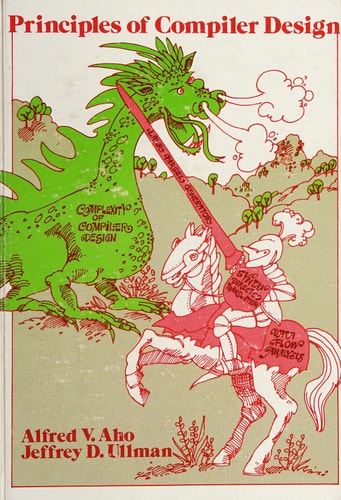
Principles of Compiler Design
0
0
As an Amazon Associate and affiliate partner, Menrva Books earns from qualifying purchases. Learn more
Author Description
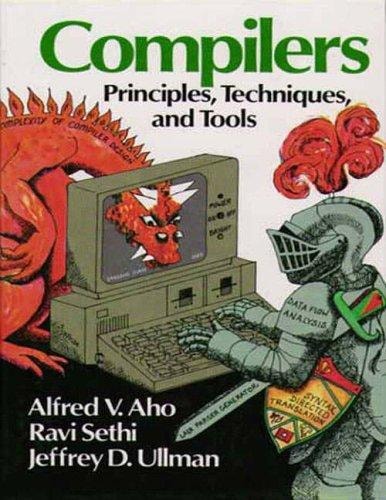
Principles of Compiler Design is a classic textbook that introduces the fundamental concepts and techniques used in the design and implementation of compilers. It covers the entire compilation process, from lexical analysis and parsing to code generation and optimization, providing a solid foundation for understanding how programming languages are translated into machine code.
Menrva's Summary
THE THESIS
This text investigates the fundamental principles and mathematical frameworks required to design and implement efficient compilers for high-level programming languages. Alfred Aho, a renowned computer scientist, provides a rigorous examination of the translation process from source code to machine-executable instructions. The book establishes a systematic approach to lexical analysis, syntax parsing, and code optimization, serving as a foundational guide for understanding the architecture of modern language processors.
THE SCOPE MAP
What You Will Find
- Comprehensive coverage of lexical analysis and symbol table management.
- Detailed methodologies for syntax analysis, including top-down and bottom-up parsing techniques.
- Theoretical frameworks for intermediate code generation and machine-independent optimization.
- Practical applications of formal language theory and finite automata in compiler construction.
THE AUTHORITY PERSPECTIVE
Experts widely recognize this work as a seminal text in the field of computer science, frequently citing its clarity and depth regarding compiler architecture. Readers often note the academic density of the prose, which remains a standard reference for students and professionals engaged in language implementation.
Page Count:
604
Publication Date:
1977-01-01
Publisher:
Addison Wesley Higher Education (a Pearson Education company)
ISBN-10:
0201100738
ISBN-13:
9780201100730
Compilers
Computer Science
Software Engineering
textbook
Programming
Community Tags
Similar Books