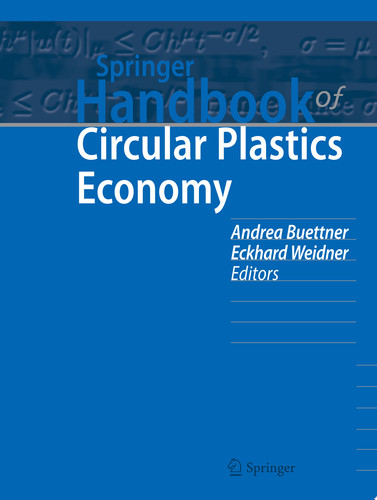
Springer Handbook of Circular Plastics Economy
0
0
As an Amazon Associate and affiliate partner, Menrva Books earns from qualifying purchases. Learn more
Author Description
This Springer Handbook assembles the existing knowledge concerning plastic materials and identifies obstacles and objectives of innovations and technologies that will bring human society closer to the goal of a fully circular economy of plastic materials. Consumers profit everyday from the versatile functionalities of plastic materials, but this diversity also brings a range of challenges: recycling may be costly and laborious, and too many plastic products still end up as waste in the environment. The handbook offers a source of information, a knowledge base, and inspiration for those aiming to create an economy that paves the road for future generations. The editorial board and invited authors represent international key figures from a broad range of disciplines, including chemistry, engineering, material sciences, logistics, data and information sciences, systems engineering, economy and sustainability as well as disciplines related to culture, art, and design. With its diversity, the book aims to fulfil the huge demand for information on novel technologies and legal approaches in politics, industry and society. Key topics include: Development of biodegradable plastics Advanced recycling strategies Design for recyclability Legal and economic perspectives Role of startups and innovative technologies Novel business models and business strategies By allowing the reader to learn and apply the measures needed for the implementation of a Circular Plastics Economy, the handbook will be of particular interest to innovators, decision-makers, planners, designers, producers in industry, politics, and society as well as consumers, students, teachers, communicators, journalists, and cultural workers.
Menrva's Summary
THE THESIS
This handbook investigates the current state of knowledge regarding plastic materials and outlines the innovations and technologies required to achieve a fully circular economy for plastics. It addresses the challenges posed by the widespread use and disposal of plastics, offering a comprehensive resource for achieving a sustainable future. The book draws on expertise from a diverse range of international figures across chemistry, engineering, material sciences, logistics, data sciences, systems engineering, economics, sustainability, culture, art, and design. It aims to meet the demand for information on new technologies and policy approaches, providing a foundation for implementing a Circular Plastics Economy.
THE SCOPE MAP
- Development of biodegradable plastics
- Advanced recycling strategies
- Design for recyclability
- Legal and economic perspectives on circularity
- The role of startups and innovative technologies
- Novel business models and strategies for a circular economy
THE AUTHORITY PERSPECTIVE
This handbook is positioned as a comprehensive resource for understanding and implementing a Circular Plastics Economy. Its interdisciplinary approach, drawing from experts in science, engineering, economics, and design, suggests a broad appeal to professionals and policymakers. The inclusion of topics such as biodegradable plastics, advanced recycling, and new business models indicates a focus on practical solutions and future-oriented strategies. The book is intended to inform and inspire a wide audience, from industry leaders and politicians to students and consumers, aiming to facilitate the transition towards a more sustainable use of plastic materials.
Page Count:
1141
Publication Date:
2025-06-27
Publisher:
Springer Nature Switzerland
ISBN-10:
3031662083
ISBN-13:
9783031662089
Science & Technology
Business
Non-Fiction
Innovation
Plastics
Sustainability
Recycling
Community Tags
Other Editions(2)
Similar Books







Reader Comments
Share Your Thoughts
No comments yet. Be the first to share your thoughts!