Vaadivaasal: Arena
0
0
As an Amazon Associate and affiliate partner, Menrva Books earns from qualifying purchases. Learn more
Author Description
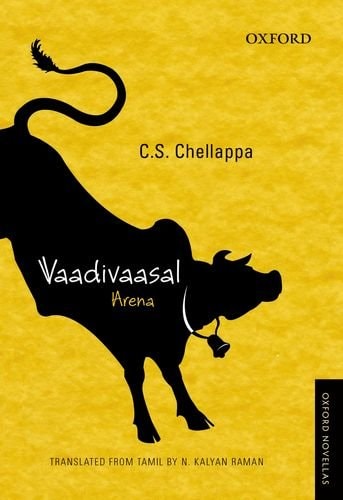
Vaadivaasal, a novella published in 1949, is considered as a modern literary classic in Tamil. It describes the events of an afternoon in Periyapatti, a village in southern Tamil Nadu, where a jallikattu-contest involving the traditional sport of bull taming-is under way. The novella opens with the arrival of bulls in the village from near and far, excitement and anticipation from the crowd of onlookers, and tales of past heroics being exchanged among the villagers. Through the afternoon, Picchi, a young man from distant Usilanoor, displays his prowess at bull-taming, triumphing against several bulls. The highlight of the day is his encounter with the Kari bull, prize animal fielded by the Periyapatti zameendar, which he defeats in a show of great ingenuity and courage. After being driven mad by the frenzy of defeat, the animal is shot dead by its owner as a means of salvaging the zameendar's pride. It is revealed gradually in the course of the novella that the Kari bull had killed Picchi's father, a legendary bull-tamer, in a jallikattu held many years ago and that Picchi has come to Periyapatti with the express intention of avenging his father's death through a contest where he will be risking his own life.The contest in a jallikattu is always between the bull tamer and a man of power, who is represented by the bull. Vaadivaasal is a masterful account not only of a traditional sport and the people who engaged in it, but also of the relations of power and how they played out in a bygone era. As a work that captures the tremors of a life-and-death battle between man and animal, it is an outstanding achievement in the annals of Tamil prose fiction.
Menrva's Summary
THE PULSE
Picchi, a young man from Usilanoor, enters the dangerous jallikattu arena to confront the legendary Kari bull that killed his father. Driven by a need for vengeance and the restoration of his family honor, Picchi faces both the physical threat of the powerful animal and the social weight of the village zameendar who owns it. The narrative unfolds over a single afternoon, capturing the tension of the contest and the underlying power dynamics between the tamer and the landed elite. The prose maintains a tight focus on the immediate sensory experience of the arena, building toward a final, fatal confrontation.
INSIDE THE PAGES
- Focus on the traditional sport of jallikattu as a central narrative device
- Exploration of caste and power dynamics in rural Tamil Nadu
- Use of a single-day timeframe to build narrative tension
- Character-driven conflict between the protagonist and the zameendar
- Symbolic representation of the bull as an extension of the owner's status
- Detailed descriptions of bull-taming techniques and animal behavior
- Themes of ancestral legacy and personal retribution
- Realistic portrayal of village life and communal anticipation
THE COLLECTIVE ECHO
Readers and critics frequently highlight the novella's ability to condense complex social hierarchies into the high-stakes environment of a bull-taming contest. Discussion often centers on the author's precise prose, which captures the visceral intensity of the sport while maintaining a clinical eye on the power struggles of the era. The work is noted for its economy of language, effectively balancing the physical action of the arena with the internal motivations of the protagonist. Many observers appreciate how the story functions as both a cultural document of a specific region and a timeless exploration of human courage against overwhelming odds.
Page Count:
120
Publication Date:
2014-02-02
Publisher:
Oxford University Press
ISBN-10:
0198097476
ISBN-13:
9780198097471
Sports
Fiction
Tamil
Novella
India
Historical
Community Tags
Similar Books