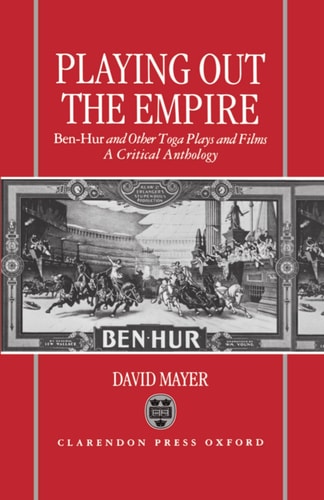
Playing Out the Empire: Ben-Hur and Other Toga Plays and Films, 1883-1908: A Critical Anthology
0
0
As an Amazon Associate and affiliate partner, Menrva Books earns from qualifying purchases. Learn more
Author Description
The "toga play" is a genre of theatrical melodrama which flourished in the late nineteenth century and which re-emerged in silent cinema and later Hollywood "epics." This first collection of the most important playscripts and film scenarios of toga plays includes the popular Victorian melodrama The Sign of the Cross (1895), Claudian (1883), The Last Days of Pompeii, Ben Hur (both the play and the film), The Charioteer, and D.W. Griffith's earliest toga film, The Barbarian Ingomar (1908). David Mayer's detailed introductions show how the plays cast new light on Victorian attitudes toward issues of class, gender, religion, and imperialism. The volume is generously illustrated.
Menrva's Summary
THE THESIS
This volume investigates the cultural significance and evolution of the 'toga play' genre as a mirror for late nineteenth-century societal values. David Mayer, a scholar of Victorian theater and early cinema, utilizes a collection of primary source scripts and film scenarios to argue that these melodramatic works functioned as a vehicle for exploring contemporary anxieties regarding class, gender, religion, and imperial expansion. By examining the transition from stage to screen, the author provides a framework for understanding how classical antiquity was repurposed to serve the ideological needs of the Victorian and Edwardian eras.
THE SCOPE MAP
What You Will Find
- A curated selection of playscripts and film scenarios including 'The Sign of the Cross', 'Claudian', and 'Ben-Hur'.
- An analysis of the stylistic transition from Victorian stage melodrama to early silent cinema.
- Historical context regarding the influence of imperialist ideology on popular entertainment.
- Critical introductions that link theatrical tropes to specific social issues of the 1883-1908 period.
THE AUTHORITY PERSPECTIVE
Scholars and theater historians frequently cite this anthology as a foundational resource for understanding the intersection of classical reception and popular Victorian entertainment. The text is noted for its academic rigor and its ability to bridge the gap between theatrical history and early film studies.
Page Count:
321
Publication Date:
1994-03-24
Publisher:
Clarendon Press
ISBN-10:
0198119909
ISBN-13:
9780198119906
History
Motion picture plays
Theater
Film Studies
Community Tags
Similar Books