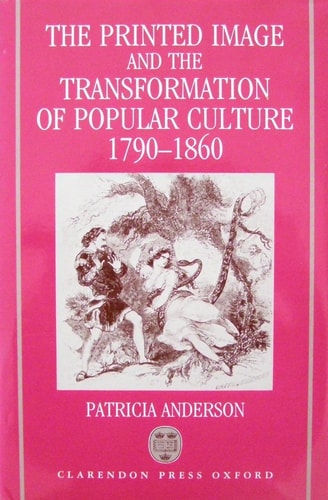
The Printed Image and the Transformation of Popular Culture, 1790-1860
0
0
As an Amazon Associate and affiliate partner, Menrva Books earns from qualifying purchases. Learn more
Author Description
In mid-nineteenth century Britain, literacy was by no means universal, and printed imagery captured the popular imagination in a way that words alone could not. This study shows how the widening dissemination of print led to the transformation of popular cultural experience such that by 1840 an essentially modern mass culture had begun to develop. Focusing on four illustrated magazines, but looking also at penny fiction and broadsides, Anderson interprets a wide variety of neglected sources. A recurring theme is the decline of the role of high art reproduction. Anderson combines modern cultural theory and historical evidence to demonstrate how people of all kinds--especially workers and women--interacted with the printed image, helping to shape the increasingly visual culture that was ultimately to lead to the growth of twentieth-century mass media.
Menrva's Summary
THE THESIS
This study investigates how the proliferation of printed imagery in nineteenth-century Britain catalyzed the emergence of a modern mass culture. Patricia Anderson, a scholar of cultural history, utilizes a synthesis of historical evidence and contemporary cultural theory to examine the shift in public consumption habits. By analyzing the interplay between visual media and the working class, she argues that the democratization of print fundamentally altered the social landscape long before the advent of twentieth-century mass media.
THE SCOPE MAP
What You Will Find
- Analysis of four primary illustrated magazines from the 1790-1860 period.
- Examination of ephemeral print formats including penny fiction and broadsides.
- Exploration of the decline of high art reproduction in favor of popular visual narratives.
- Case studies on the interaction between workers, women, and visual media.
THE AUTHORITY PERSPECTIVE
Experts recognize this work as a significant contribution to the study of visual culture and the history of the press. Readers frequently note the academic density of the prose, which provides a rigorous framework for understanding the transition toward modern media consumption.
Page Count:
224
Publication Date:
1991-12-19
Publisher:
Oxford University Press
ISBN-10:
019811236X
ISBN-13:
9780198112365
History
Media Studies
Criticism history
Working class
Great Britain
Sociology
Printing
Art History
British History
Community Tags
Similar Books