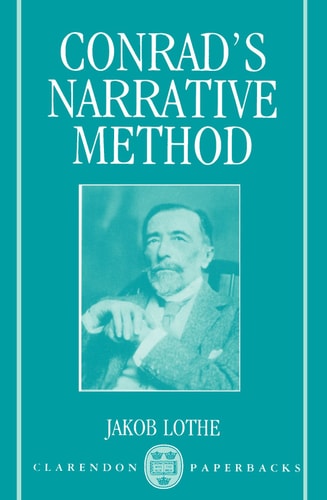
Conrad's Narrative Method
0
0
As an Amazon Associate and affiliate partner, Menrva Books earns from qualifying purchases. Learn more
Author Description
This is the first full-length study to apply recent developments in critical theory and practice to the whole canon of Conrad's works. Using a structuralist approach, the book analyzes the author's sophisticated narrative method, focusing on its devices, functions, variations, and thematic implications. Lothe demonstrates that the narrative method is an integral aspect of textual structure, and discusses the methods of major post-structuralist critics such as Edward W. Said and J. Hillis Miller as they apply to the body of Conrad's work. By means of a critical methodology that can be applied to the various interpretations of Conrad's works, this book makes a a significant contribution to Conrad studies, as well as to the study of narrative.
Menrva's Summary
THE THESIS
How does Joseph Conrad’s narrative method function as an integral component of his textual structure across his entire literary canon? Jakob Lothe, an established scholar in narrative theory, utilizes a structuralist framework to examine the technical devices and thematic implications inherent in Conrad’s prose. By synthesizing these structuralist insights with post-structuralist critiques from figures like Edward W. Said and J. Hillis Miller, Lothe constructs a methodology for interpreting the complexity of Conrad’s storytelling techniques.
THE SCOPE MAP
What You Will Find
- A comprehensive analysis of the entire canon of Joseph Conrad’s works.
- A structuralist framework for evaluating narrative devices, functions, and variations.
- A comparative study of post-structuralist critical approaches applied to Conrad.
- A replicable methodology for analyzing narrative structure in complex literary texts.
THE AUTHORITY PERSPECTIVE
Scholars and students of literature frequently cite this work as a foundational text for understanding the technical mechanics of Conrad’s fiction. Readers often note the academic density of the prose, which serves as a rigorous guide for those interested in the intersection of structuralist theory and narrative analysis.
Page Count:
328
Publication Date:
1989-08-03
Publisher:
Oxford University Press
ISBN-10:
0198129610
ISBN-13:
9780198129615
Non-Fiction
Academic
Literary theory
Literary Criticism
Community Tags
Other Editions(3)
Similar Books