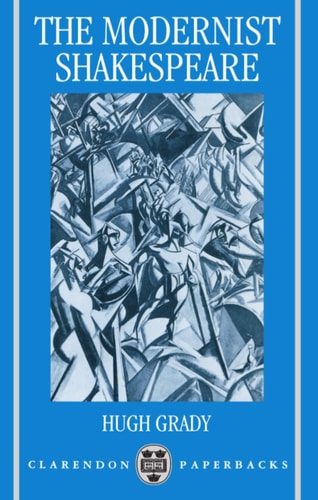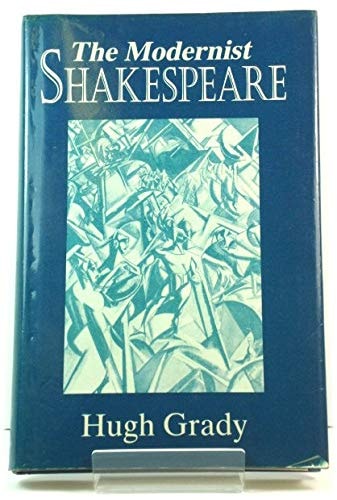
The Modernist Shakespeare: Critical Texts in a Material World
0
0
As an Amazon Associate and affiliate partner, Menrva Books earns from qualifying purchases. Learn more
Author Description
Every epoch recreates its classical icons--and for literary culture no icon is more central or more protean than Shakespeare. Even though finding the authentic Shakespeare has been a goal of scholarship since the eighteenth century, he has always been constructed as a contemporary author. In this critical study, Grady charts the construction of Shakespeare as a twentieth-century text, redirecting "new historicist" methods to an investigation of the social roots of contemporary Shakespeare criticism. Beginning with the formation of professionalism as an ideology in the Victorian Age, this theoretically-informed study describes widespread attempts to save the values of the cultural tradition, in reformulated Modernist guise, from the threat of professionalist postivism in modern universities.
Menrva's Summary
THE THESIS
This study investigates how twentieth-century literary criticism has continuously reconstructed Shakespeare to serve contemporary ideological needs. Hugh Grady, a scholar of Shakespearean studies, utilizes a framework rooted in new historicism to examine the social and institutional pressures shaping academic discourse. He argues that the pursuit of an authentic Shakespeare is a persistent myth, revealing instead how critics have consistently refashioned the playwright to preserve cultural values against the encroachment of professional positivism in the modern university system.
THE SCOPE MAP
What You Will Find
- An analysis of the transition from Victorian professionalism to twentieth-century academic ideologies.
- A critical examination of the new historicist methodology applied to Shakespearean scholarship.
- A historical overview of how Shakespeare has been adapted as a contemporary icon across different eras.
- A discussion on the tension between cultural tradition and the rise of professional positivism in higher education.
THE AUTHORITY PERSPECTIVE
Scholars recognize this work as a significant contribution to the meta-critical study of Shakespearean interpretation. Readers frequently note the academic density of the prose, which is intended for advanced students and researchers in the field of literary theory.
Page Count:
272
Publication Date:
1991-03-14
Publisher:
Oxford University Press
ISBN-10:
0198122225
ISBN-13:
9780198122227
Cultural History
Modernism
Academic
Literary Criticism