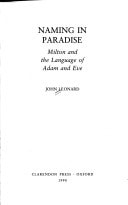
Naming in Paradise: Milton and the Language of Adam and Eve
0
0
As an Amazon Associate and affiliate partner, Menrva Books earns from qualifying purchases. Learn more
Author Description
Names and naming are more important to Paradise Lost than may first appear. This critical study traces Milton's use of prelapsarian and postlapsarian names and the various distinctions that infiltrate Paradise Lost. Through close analysis of the poem's words and narrative, Leonard uncovers areas of meaning that have previously been lost to modern readers, supplying a valuable interpretive key to many important passages. Taking Adam's naming of the animals as his starting point, Leonard explores such topics as the naming of Eve, the blotting out of the rebel angels' names, and Satan's deliberate misapplication of names. By relating these and other topics to the larger episodes of the Fall of the Angels and the Fall of Adam and Eve, Leonard enriches our reading of Paradise Lost. Referring to Milton's earlier editors, as well as modern critics, he provides new insights into such questions as: was Milton of the Devil's party?; were the angels self-tempted?; was Adam right to choose death with Eve?. Intended primarily for Milton specialists, the warm and lively style of Naming in Paradise ensures that this book will be accessible both to graduate and undergraduate students.
Menrva's Summary
THE THESIS
This study investigates the linguistic and theological significance of naming within John Milton's Paradise Lost, arguing that the act of naming serves as a critical interpretive key to the poem's structure. John A. Leonard, a scholar of Miltonic studies, utilizes close textual analysis of the poem's vocabulary to examine how prelapsarian and postlapsarian naming conventions reflect the moral and ontological shifts within the narrative. By situating these linguistic choices within the broader context of the Fall of the Angels and the Fall of Man, Leonard provides a framework for understanding Milton's complex treatment of identity and authority.
THE SCOPE MAP
What You Will Find
- Analysis of Adam's naming of the animals as a foundational linguistic act.
- Examination of the deliberate misapplication of names by Satan.
- Discussion regarding the erasure of the rebel angels' names from the heavenly record.
- Comparative study of Milton's earlier editors and contemporary critical perspectives.
THE AUTHORITY PERSPECTIVE
Experts identify this work as a specialized contribution to Miltonic scholarship that provides necessary clarity on the poet's linguistic strategies. Readers frequently note that while the text is written for specialists, its accessible prose makes it a valuable resource for graduate and undergraduate students of seventeenth-century literature.
Page Count:
318
Publication Date:
1990-01-01
Publisher:
Oxford University Press
ISBN-10:
0198129580
ISBN-13:
9780198129585
Poetry
Literary Criticism
Academic
English literature
Community Tags
Similar Books