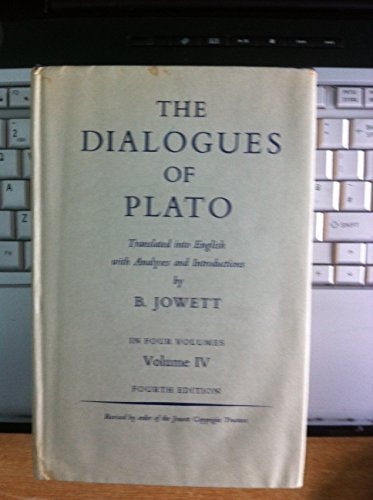
The Dialogues of Plato
0
0
As an Amazon Associate and affiliate partner, Menrva Books earns from qualifying purchases. Learn more
Author Description
Book may have numerous typos, missing text, images, or index. Purchasers can download a free scanned copy of the original book (without typos) from the publisher. 1914. Excerpt:... INTRODUCTION.the Protagoras, like several of the Dialogues of Plato, is put into the mouth of Socrates, who describes a conversation which had taken place between himself and the great Sophist at the house of Callias--" the man who had spent more upon the Sophists than all the rest of the world, and in which the learned Hippias and the grammarian Prodicus had also shared, as well as Alcibiades and Critias, both of whom said a few words -- in the presence of a distinguished company consisting of disciples of Protagoras and of leading Athenians belonging to the Socratic circle. The Dialogue commences with a request on the part of Hippocrates that Socrates would introduce him to the celebrated teacher. He has come before the dawn had risen to testify his zeal. Socrates moderates his excitement and advises him to find out "what Protagoras will make of him," before he becomes his pupil. They go together to the house of Callias; and Socrates, after explaining the purpose of their visit to Protagoras, asks the question "What he will make of Hippocrates?" Protagoras answers that he will make a better and a wiser man." "But in what will he be better?" -- Socrates desires to have a more precise answer. Protagoras replies, " That he will teach him prudence in affairs private and public; in short, the science or knowledge of human life." This, as Socrates admits, is a noble profession: but he is doubtful -- or rather would have been, if Protagoras had not assured him of it --- whether such knowledge can be taught. And this for two reasons: (1) Because the Athenian people, who recognize in their assemblies the distinction between the skilled and the unskilled, do not recognize any distinction between the trained politician and the untrained; (2) Because the wisest and best Athenian citizens do...
Menrva's Summary
THE THESIS
This work investigates the fundamental nature of virtue, knowledge, and the possibility of teaching wisdom through the dialectical method. Benjamin Jowett, a renowned 19th-century scholar and Master of Balliol College, provides this seminal translation of Plato's dialogues. The text utilizes the Socratic method to challenge the claims of Sophists and explore the definitions of justice, piety, and the good life within the context of Athenian society.
THE SCOPE MAP
What You Will Find
- Detailed examinations of Socratic dialectic and questioning techniques
- Philosophical inquiries into the teachability of virtue and political wisdom
- Historical context regarding the Sophist movement in ancient Athens
- Critical introductions and analysis provided by B. Jowett
THE AUTHORITY PERSPECTIVE
Experts consider Jowett's translation a foundational text for students of Western philosophy due to its clarity and literary elegance. Readers frequently note that while the prose is accessible, the density of the philosophical arguments requires careful and repeated study to fully grasp the nuances of the Socratic inquiry.
Page Count:
0
Publication Date:
2021-01-01
Publisher:
Oxford at the Clarendon Press
ISBN-10:
0198141661
ISBN-13:
9780198141662
Philosophy
Politics
Classical
Political Philosophy
Ethics
Greek & Roman
Ancient Greece
Community Tags
Similar Books