Aeschylus: Persae
0
0
As an Amazon Associate and affiliate partner, Menrva Books earns from qualifying purchases. Learn more
Author Description
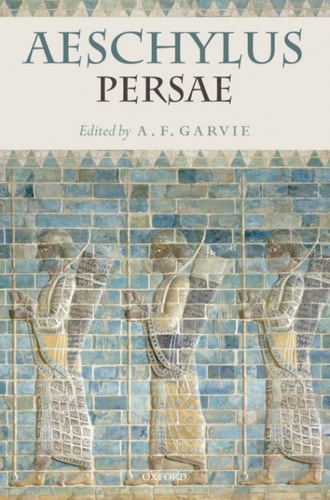
Aeschylus' Persae, first produced in 472 BC, is the oldest surviving Greek tragedy. It is also the only extant Greek tragedy that deals, not with a mythological subject, but with an event of recent history, the Greek defeat of the Persians at Salamis in 480 BC. Unlike Aeschylus' other surviving plays, it is apparently not part of a connected trilogy. In this new edition A. F. Garvie encourages the reader to assess the Persae on its own terms as a drama. It is not a patriotic celebration, or a play with a political manifesto, but a genuine tragedy, which, far from presenting a simple moral of hybris punished by the gods, poses questions concerning human suffering to which there are no easy answers. In his Introduction Garvie defends the play's structure against its critics, and considers its style, the possibility of thematic links between it and the other plays presented by Aeschylus on the same occasion, its staging, and the state of the transmitted text. The Commentary develops in greater detail some of the conclusions of the Introduction.
Menrva's Summary
THE PULSE
The Persian Empire faces the devastating aftermath of their defeat at the Battle of Salamis as the royal court in Susa awaits news of their king's fate. Queen Atossa, mother of Xerxes, seeks guidance from the chorus of elders as the reality of the military catastrophe unfolds through the arrival of a messenger. The narrative framework utilizes the traditional structure of Greek tragedy, focusing on the psychological toll of hubris and the shifting fortunes of an empire. The play operates within the constraints of the Athenian theatrical tradition, emphasizing choral odes and dialogue to convey the gravity of the historical loss.
INSIDE THE PAGES
- Historical subject matter based on the Battle of Salamis
- Use of the chorus as a central narrative voice
- Exploration of the theme of hubris and divine retribution
- Dramatic irony regarding the fate of Xerxes
- Focus on the Persian perspective of the conflict
- Formal structure typical of early Greek tragedy
- Emphasis on the emotional impact of war on the ruling class
- Examination of the fragility of power and human suffering
THE COLLECTIVE ECHO
Discussion often centers on the unique position of this play as the only extant Greek tragedy based on contemporary historical events rather than mythology. Readers frequently highlight the complexity of the portrayal of the Persians, noting that Aeschylus avoids simple caricature in favor of a nuanced look at grief and defeat. Critics often examine the structural integrity of the play, debating how the choral odes function to build tension and atmosphere. Many analyses focus on the philosophical questions regarding human suffering that the text poses, suggesting that the work resists easy moralizing. The play remains a significant subject of study for those interested in the intersection of political history and dramatic art.
Page Count:
464
Publication Date:
2009-01-01
Publisher:
Oxford University Press, USA
ISBN-10:
0191570818
ISBN-13:
9780191570810
History
Drama
Humanities
Theatre
Ancient Greece
Dramatic works
Special Topics
English & College Success
Classical
Greek Tragedy
English
Community Tags
Similar Books