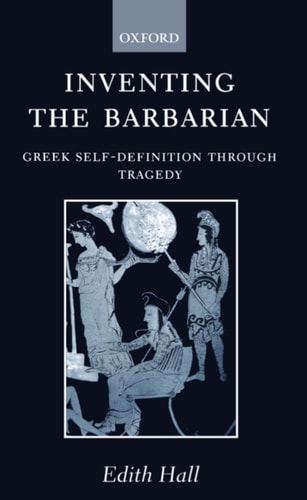
Inventing the Barbarian: Greek Self-Definition through Tragedy
0
0
As an Amazon Associate and affiliate partner, Menrva Books earns from qualifying purchases. Learn more
Author Description
Incest, polygamy, murder, sacrilege, impalement, castration, female power, and despotism are some of the images used by Athenian tragedians to define the non-Greek, "barbarian" world. This book explains for the first time the reasons behind their singular fascination with barbarians. Edith Hall sets the Greek plays against the historical background of the Panhellenic wars, and the establishment of an Athenian empire based on democracy and slavery. Analyzed within the context of contemporary anthropology and political philosophy, Hall reveals how the poets conceptualized the barbarian as the negative embodiment of Athenian civic ideals. She compares the treatment of foreigners in Homer and in tragedy, showing that the new dimension which the idea of the barbarian had brought to the tragic theater radically affected the poets' interpretation of myth and their evocation of the distant past, as well as enriching their reportoire of aural and visual effects. Hall argues that the invented barbarian of the tragic stage was a powerful cultural expression of Greek xenophobia and chauvinism that, paradoxically, produced and outburst of creative energy and literary innovation.
Menrva's Summary
THE THESIS
This work investigates how Athenian tragedians constructed the concept of the "barbarian" as a negative reflection of their own civic and cultural identity. Edith Hall, a distinguished classicist, utilizes historical evidence from the Panhellenic wars and the rise of the Athenian empire to ground her analysis. By integrating contemporary anthropological frameworks and political philosophy, she argues that the portrayal of foreigners in Greek drama served as a mechanism for defining Athenian democracy and social norms through contrast.
THE SCOPE MAP
What You Will Find
- Historical analysis of the Panhellenic wars and the development of the Athenian empire.
- Comparative study of foreign representation in Homeric epics versus classical tragedy.
- Examination of thematic tropes including despotism, incest, and gender role subversion.
- Theoretical framework linking xenophobia and chauvinism to artistic innovation in theater.
THE AUTHORITY PERSPECTIVE
Scholars frequently cite this text as a foundational study for understanding the intersection of Greek identity and dramatic literature. Experts note that the book provides a rigorous, well-documented argument that remains essential for students of classical history and theater.
Page Count:
296
Publication Date:
1989-09-05
Publisher:
Clarendon Press
ISBN-10:
0198147805
ISBN-13:
9780198147800
History
Drama
Literary Criticism
Tragedy
Political Philosophy
Anthropology
Community Tags
Similar Books














