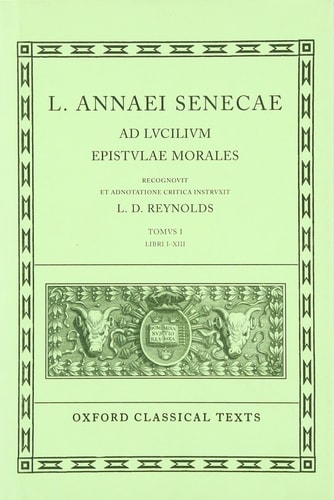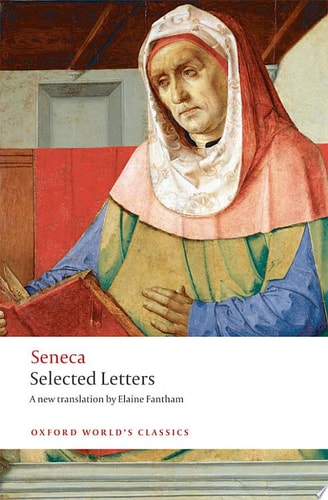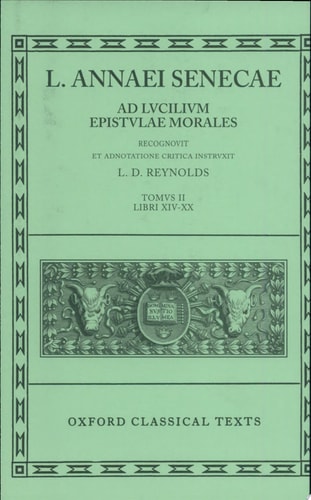
Ad Lucilium Epistulae Morales: Volume II: Books XIV-XX
0
0
As an Amazon Associate and affiliate partner, Menrva Books earns from qualifying purchases. Learn more
Author Description
Seneca, Lucius Annaeus, born at Corduba (Cordova) ca. 4 BCE, of a prominent and wealthy family, spent an ailing childhood and youth at Rome in an aunt's care. He became famous in rhetoric, philosophy, money-making, and imperial service. After some disgrace during Claudius' reign he became tutor and then, in 54 CE, advising minister to Nero, some of whose worst misdeeds he did not prevent. Involved (innocently?) in a conspiracy, he killed himself by order in 65. Wealthy, he preached indifference to wealth; evader of pain and death, he preached scorn of both; and there were other contrasts between practice and principle.We have Seneca's philosophical or moral essays (ten of them traditionally called Dialogues) on providence, steadfastness, the happy life, anger, leisure, tranquility, the brevity of life, gift-giving, forgiveness and treatises on natural phenomena. Also extant are 124 epistles, in which he writes in a relaxed style about moral and ethical questions, relating them to personal experiences; a skit on the official deification of Claudius, Apocolocyntosis (in Loeb number 15); and nine rhetorical tragedies on ancient Greek themes. Many epistles and all his speeches are lost.
Menrva's Summary
THE THESIS
This volume investigates the practical application of Stoic philosophy through the lens of personal correspondence, addressing the core question of how an individual maintains moral integrity amidst the pressures of public and private life. Seneca, a prominent Roman statesman and philosopher, draws upon his extensive experience in imperial service and his study of Hellenistic thought to provide guidance on virtue, resilience, and the nature of the human condition. The text serves as a philosophical framework for navigating adversity, utilizing the epistolary format to offer intimate, reasoned advice on ethical conduct and the pursuit of tranquility.
THE SCOPE MAP
What You Will Find
- Philosophical discourse on the nature of virtue and the management of personal conduct.
- Ethical guidance regarding the challenges of wealth, pain, and mortality.
- Primary source material reflecting the intellectual climate of the first-century Roman Empire.
- Stoic methodologies for achieving mental fortitude and emotional detachment from external circumstances.
THE AUTHORITY PERSPECTIVE
Scholars and classicists regard these epistles as a foundational text for understanding the practical implementation of Stoic ethics in the Roman world. Readers frequently note the accessibility of Seneca's prose, which balances academic rigor with a conversational tone that remains relevant to contemporary ethical inquiry.
Page Count:
238
Publication Date:
1965-12-31
Publisher:
Clarendon Press
ISBN-10:
0198146493
ISBN-13:
9780198146490
Philosophy
Classical
Ethics
Epistolary
stoicism
Community Tags
Similar Books