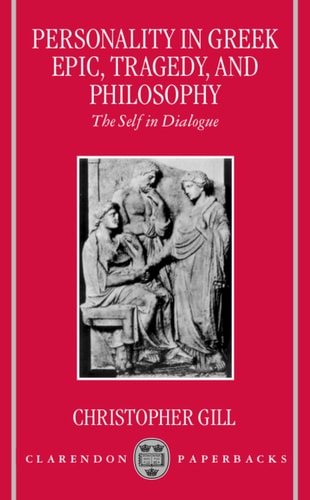
Personality in Greek Epic, Tragedy, and Philosophy: The Self in Dialogue
0
0
As an Amazon Associate and affiliate partner, Menrva Books earns from qualifying purchases. Learn more
Author Description
This is a major study of conceptions of selfhood and personality in Homer, Greek tragedy, and philosophy. The focus is on norms of personality in Greek psychology and ethics. The key thesis is that, to understand Greek thinking of this type, we need to counteract the subjective and individualistic aspects of our own thinking about the self. The book defines an 'objective-participant' conception of personality, symbolized by the idea of the person as an interlocutor in a series of types of psychological and ethical dialogue. The book is shaped as a response to recent work in the philosophy of mind, ethics, and personhood, as well as in classical scholarship. Clear and non-technical, with all Greek translated, the book brings out the continuing importance of ancient Greek thinking for contemporary study of ideas of personality and selfhood.
Menrva's Summary
THE THESIS
This study investigates how ancient Greek conceptions of selfhood and personality differ from modern individualistic frameworks. Christopher Gill, a scholar of classical philosophy, examines texts from Homeric epic, Athenian tragedy, and philosophical treatises to reconstruct an 'objective-participant' model of the self. He argues that ancient thinkers viewed personality primarily through the lens of social and ethical dialogue rather than internal subjectivity, challenging contemporary assumptions about the nature of the individual.
THE SCOPE MAP
What You Will Find
- Analysis of Homeric epic, Greek tragedy, and philosophical texts regarding the self.
- Development of the 'objective-participant' framework for understanding ancient psychology.
- Comparative study between ancient Greek ethical norms and modern philosophy of mind.
- Examination of the person as an interlocutor within social and ethical systems.
THE AUTHORITY PERSPECTIVE
Scholars and students of classics frequently cite this work as a foundational text for understanding the shift between ancient and modern psychological concepts. Readers often note the clarity of the prose, which makes complex philosophical arguments accessible to those without a background in ancient Greek language.
Page Count:
528
Publication Date:
1998-07-16
Publisher:
Clarendon Press
ISBN-10:
0198152329
ISBN-13:
9780198152323
History
Psychology
Philosophy
Ethics
Tragedy
Greek drama
Criticism history
Community Tags
Similar Books