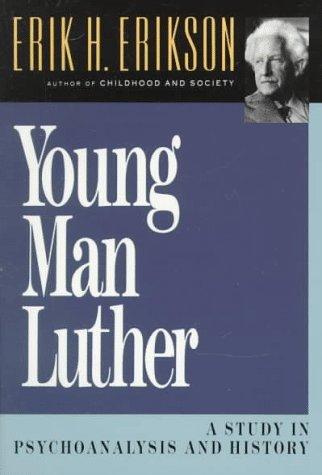
Young Man Luther
0
0
As an Amazon Associate and affiliate partner, Menrva Books earns from qualifying purchases. Learn more
Author Description
Erik Erikson's "Young Man Luther" is a landmark work of psychobiography that explores the formative years of the great religious reformer. Erikson, a leading psychoanalyst, applies his theories of psychosocial development to understand the internal struggles and crises that shaped Martin Luther's personality and theology. The book delves into Luther's intense fear of God, his monastic experiences, and the societal pressures of 16th-century Europe, arguing that Luther's personal battles were the crucible in which his revolutionary ideas were forged. This study offers profound insights into the making of a historical figure and the complex relationship between individual psychology and sweeping social change.
Menrva's Summary
THE THESIS
This book examines the formative years of Martin Luther, focusing on the psychological and spiritual crises that shaped his revolutionary theological and political stances. Erik Erikson, a renowned psychoanalyst, applies his theoretical framework to understand Luther's development from a young man grappling with intense personal anxieties and a fear of God to the pivotal figure who challenged the established religious order. The work delves into Luther's monastic experiences, his intellectual struggles, and the societal context of 16th-century Europe, arguing that his personal turmoil was intrinsically linked to his public actions.
THE SCOPE MAP
- What You Will Find:
- A psychoanalytic exploration of Martin Luther's early life and development.
- Analysis of Luther's internal conflicts, including his fear of God and personal anxieties.
- Examination of Luther's experiences within the Augustinian monastery.
- The historical and social context of 16th-century Germany and its influence on Luther.
- Erikson's theoretical framework for understanding personality development and crisis.
- The connection between Luther's personal struggles and his theological innovations.
- The book's contribution to both biographical studies and psychological theory.
THE AUTHORITY PERSPECTIVE
Erik Erikson's "Young Man Luther" is widely regarded as a seminal work in the field of psychobiography, offering a groundbreaking psychoanalytic interpretation of Martin Luther's life and motivations. Critics have praised Erikson's ability to synthesize historical detail with psychological insight, providing a compelling narrative of Luther's formative years. The book is often cited for its influential approach to understanding historical figures through the lens of developmental psychology. While some historians may debate specific interpretations, the work remains a significant contribution to understanding the complex interplay between individual psychology and historical change.
Page Count:
288
Publication Date:
1993-01-01
ISBN-10:
0393310361
Non-Fiction
Biography
Art
Psychology
History
Community Tags
Similar Books