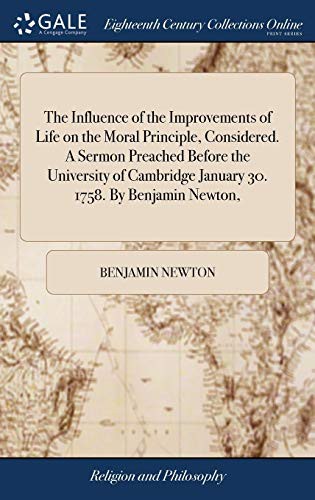
The Influence of the Improvements of Life on the Moral Principle, Considered: A Sermon Preached Before the University of Cambridge January 30, 1758
0
0
As an Amazon Associate and affiliate partner, Menrva Books earns from qualifying purchases. Learn more
Author Description
The 18th century was a wealth of knowledge, exploration and rapidly growing technology and expanding record-keeping made possible by advances in the printing press. In its determination to preserve the century of revolution, Gale initiated a revolution of its own: digitization of epic proportions to preserve these invaluable works in the largest archive of its kind. Now for the first time these high-quality digital copies of original 18th century manuscripts are available in print, making them highly accessible to libraries, undergraduate students, and independent scholars. The Age of Enlightenment profoundly enriched religious and philosophical understanding and continues to influence present-day thinking. Works collected here include masterpieces by David Hume, Immanuel Kant, and Jean-Jacques Rousseau, as well as religious sermons and moral debates on the issues of the day, such as the slave trade. The Age of Reason saw conflict between Protestantism and Catholicism transformed into one between faith and logic -- a debate that continues in the twenty-first century. ++++ The below data was compiled from various identification fields in the bibliographic record of this title. This data is provided as an additional tool in helping to insure edition identification: ++++ British Library T037178 Cambridge: printed for J. Bentham; for Messrs Thurlbourn & Woodyer, in Cambridge; and C. Bathurst, London, 1758. 18p.; 4°
Menrva's Summary
THE THESIS
The sermon investigates the relationship between societal progress and ethical development. Benjamin Newton, a figure likely associated with the academic and religious circles of Cambridge in the mid-18th century, delivers this discourse. The text, preached before the University of Cambridge on January 30, 1758, addresses the moral implications arising from the perceived improvements in life during that era. It likely draws upon contemporary philosophical and theological debates to explore how advancements in society might influence, or be influenced by, the moral principles of individuals and the community.
THE SCOPE MAP
- Analysis of societal advancements in the 18th century.
- Exploration of the impact of these advancements on moral principles.
- Theological and philosophical arguments concerning ethical development.
- Contextualization within the intellectual climate of the Age of Enlightenment.
- A specific date and occasion for the discourse: January 30, 1758, before the University of Cambridge.
THE AUTHORITY PERSPECTIVE
This sermon, delivered in 1758, likely engaged with the prevailing intellectual currents of the Age of Enlightenment, a period marked by significant shifts in religious and philosophical thought. The text's focus on the interplay between societal improvements and moral principles suggests it was intended to provoke reflection among the educated elite of Cambridge University. As a historical document, its value lies in understanding the moral and theological debates of the mid-18th century, reflecting a time when faith and reason were often critically examined.
Page Count:
20
Publication Date:
1758-01-30
ISBN-10:
1379730244
ISBN-13:
9781379730248
Non-Fiction
History
History of Ideas
Sermons
Moral Philosophy
Community Tags
Similar Books