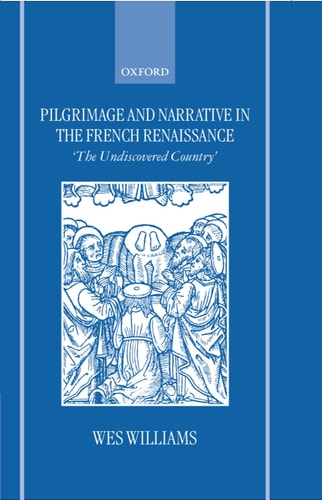
Pilgrimage and Narrative in the French Renaissance: The Undiscovered Country
0
0
As an Amazon Associate and affiliate partner, Menrva Books earns from qualifying purchases. Learn more
Author Description
This is the first full-length study of the place and meaning of pilgrimage in European Renaissance culture. It makes new material available and also provides fresh perspectives on canonical writers such as Montaigne, Erasmus, Petrarch, Augustine, and Gregory of Nyssa. This wide-ranging and timely new work aims to question the ways in which recent theoretical and historical research in the area has determined the differences between fictional worlds and the real.
Menrva's Summary
THE THESIS
This study investigates the intersection of pilgrimage, narrative structure, and cultural identity within the context of the French Renaissance. Wes Williams, a scholar of early modern literature, utilizes a combination of historical research and literary analysis to examine how the concept of the 'pilgrimage' functioned as both a physical practice and a metaphorical framework for authors of the period. By analyzing the works of figures such as Montaigne, Erasmus, and Petrarch, the author argues that the act of traveling toward a sacred destination serves as a critical lens for understanding the construction of fictional and historical realities.
THE SCOPE MAP
What You Will Find
- Analysis of pilgrimage as a cultural and literary trope in the European Renaissance.
- Examination of canonical texts by Montaigne, Erasmus, Petrarch, Augustine, and Gregory of Nyssa.
- Investigation into the boundaries between historical reality and fictional narrative construction.
- Contextualization of early modern travel practices within broader theological and philosophical frameworks.
THE AUTHORITY PERSPECTIVE
Scholars recognize this work as a foundational text for understanding the intersection of travel literature and Renaissance philosophy. Readers frequently note the academic density of the prose and the depth of the author's engagement with primary source material.
Page Count:
336
Publication Date:
1999-02-25
Publisher:
Clarendon Press
ISBN-10:
0198159404
ISBN-13:
9780198159407
History
Religion
Renaissance
Literary Criticism
European History