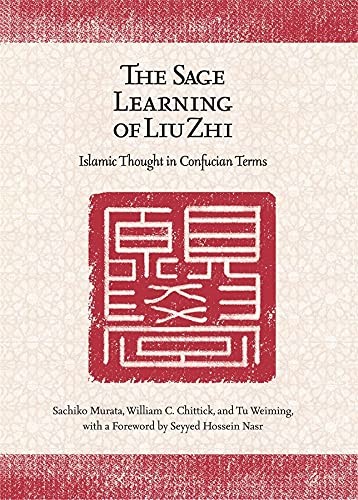
The Sage Learning of Liu Zhi
0
0
As an Amazon Associate and affiliate partner, Menrva Books earns from qualifying purchases. Learn more
Author Description
Liu Zhi (ca. 1670-1724) was one of the most important scholars of Islam in traditional China. His Tianfang xingli (Nature and principle in Islam), the Chinese-language text translated here, focuses on the roots or principles of Islam. It was heavily influenced by several classic texts in the Sufi tradition. Liu's approach, however, is distinguished from that of other Muslim scholars in that he addressed the basic articles of Islamic thought with Neo-Confucian terminology and categories. Besides its innate metaphysical and philosophical value, the text is invaluable for understanding how the masters of Chinese Islam straddled religious and civilizational frontiers and created harmony between two different intellectual worlds. The introductory chapters explore both the Chinese and the Islamic intellectual traditions behind Liu's work and locate the arguments of Tianfang xingli within those systems of thought. The copious annotations to the translation explain Liu's text and draw attention to parallels, as well as differences, in Chinese-, Arabic-, and Persian-language works.
Menrva's Summary
THE THESIS
This book investigates how a prominent Chinese Islamic scholar synthesized Islamic and Neo-Confucian thought. Sachiko Murata's work examines Liu Zhi's seminal text, Tianfang xingli, which explores the fundamental principles of Islam. The book details Liu's unique approach of employing Neo-Confucian terminology to articulate core Islamic tenets, drawing heavily from Sufi traditions. It highlights Liu's intellectual achievement in bridging distinct cultural and philosophical worlds, offering insights into the dynamics of religious and civilizational exchange.
THE SCOPE MAP
- Analysis of the Chinese and Islamic intellectual traditions informing Liu Zhi's work.
- Detailed examination of Liu Zhi's Tianfang xingli, focusing on its metaphysical and philosophical content.
- Exploration of Liu Zhi's use of Neo-Confucian terminology and categories to explain Islamic principles.
- Discussion of the influence of classic Sufi texts on Liu Zhi's thought.
- Insights into how Chinese Islam navigated and harmonized different intellectual and civilizational frameworks.
- Copious annotations explaining Liu's text and drawing parallels with Arabic and Persian works.
- Contextualization of Liu's arguments within both Chinese and Islamic systems of thought.
THE AUTHORITY PERSPECTIVE
The Authority Perspective: This scholarly work is recognized for its in-depth analysis of Liu Zhi, a key figure in traditional Chinese Islam. It is valued for its meticulous translation and annotation of Tianfang xingli, providing crucial context for understanding the intersection of Islamic and Neo-Confucian thought. The book is considered essential for scholars of Islamic studies, Chinese intellectual history, and comparative philosophy, offering a unique perspective on cross-cultural intellectual synthesis.
Page Count:
678
Publication Date:
2009-01-01
ISBN-10:
0674033256
ISBN-13:
9780674033252
History
Non-Fiction
Philosophy
Islamic Studies
Sufism
Community Tags
Similar Books