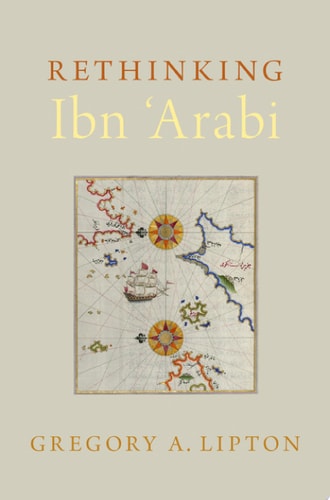
Rethinking Ibn 'Arabi
0
0
As an Amazon Associate and affiliate partner, Menrva Books earns from qualifying purchases. Learn more
Author Description
The thirteenth century mystic Ibn `Arabi was the foremost Sufi theorist of the premodern era. For more than a century, Western scholars and esotericists have heralded his universalism, arguing that he saw all contemporaneous religions as equally valid. In Rethinking Ibn `Arabi, Gregory Lipton calls this image into question and throws into relief how Ibn `Arabi's discourse is inseparably intertwined with the absolutist vision of his own religious milieu--that is, the triumphant claim that Islam fulfilled, superseded, and therefore abrogated all previous revealed religions. Lipton juxtaposes Ibn `Arabi's absolutist conception with the later reception of his ideas, exploring how they have been read, appropriated, and universalized within the reigning interpretive field of Perennial Philosophy in the study of Sufism. The contours that surface through this comparative analysis trace the discursive practices that inform Ibn `Arabi's Western reception back to the eighteenth and nineteenth century study of "authentic" religion, where European ethno-racial superiority was wielded against the Semitic Other-both Jewish and Muslim. Lipton argues that supersessionist models of exclusivism are buried under contemporary Western constructions of religious authenticity in ways that ironically mirror Ibn `Arabi's medieval absolutism.
Menrva's Summary
THE THESIS
Does the modern Western interpretation of Ibn 'Arabi as a proponent of religious universalism accurately reflect his original theological framework? Gregory A. Lipton, a scholar of religion, examines the historical and ideological shifts that transformed Ibn 'Arabi from a medieval thinker rooted in Islamic supersessionism into a modern icon of Perennial Philosophy. Lipton argues that contemporary readings often project Western biases onto the text, obscuring the original absolutist claims that defined Ibn 'Arabi's own religious context.
THE SCOPE MAP
What You Will Find
- Analysis of the reception history of Ibn 'Arabi in Western academia and esoteric circles.
- Examination of the Perennial Philosophy framework and its influence on Sufi studies.
- Historical investigation into 18th and 19th-century European constructions of religious authenticity.
Scope Limits
- The text does not provide a comprehensive biography of Ibn 'Arabi.
- It does not attempt to offer a new translation of his primary works.
THE AUTHORITY PERSPECTIVE
Scholars in the field of Islamic studies recognize this work as a critical intervention in the study of Sufi reception history. Readers frequently note the academic density of the prose and the rigorous historical methodology employed by the author to challenge long-standing interpretive norms.
Page Count:
304
Publication Date:
2018-01-01
Publisher:
Oxford University Press
ISBN-10:
0190684526
ISBN-13:
9780190684525
Philosophy
Religion
History of religion
Sufism
Special Topics
Intellectual History
Islamic Studies