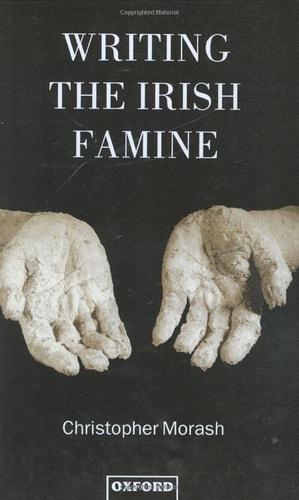
Writing the Irish Famine
0
0
As an Amazon Associate and affiliate partner, Menrva Books earns from qualifying purchases. Learn more
Author Description
This book is an original and compelling contribution to Irish cultural studies. Morash examines literary texts by writers such as William Carleton. Anthony Trollope, James Clarence Mangan, John Mitchel, and Samuel Ferguson to reveal how they interact with histories, sermons, and economic treatises and construct a narrative of one of the most important and elusive events in Irish history. Drawing on the methodology new historicist literary criticism, he examines the attempts of a wide range of nineteenth-century writing to ensure the memorialization of an event that seems to resist representation.
Menrva's Summary
THE THESIS
This work investigates how nineteenth-century Irish literature and cultural texts attempted to represent and memorialize the Great Famine, an event often described as resisting traditional narrative capture. Christopher Morash, a scholar of Irish cultural history, utilizes a new historicist framework to analyze a diverse array of primary sources. By juxtaposing literary works with sermons, economic treatises, and historical accounts, he argues that these texts collectively constructed the cultural memory of the Famine. The study focuses on the tension between the magnitude of the catastrophe and the limitations of the language used to document it.
THE SCOPE MAP
What You Will Find
- Analysis of nineteenth-century literary texts by authors including William Carleton, Anthony Trollope, and James Clarence Mangan.
- Application of new historicist literary criticism to examine the intersection of literature and historical record.
- Examination of non-literary sources such as sermons, economic treatises, and contemporary historical documents.
- Exploration of the challenges inherent in memorializing traumatic historical events through written representation.
THE AUTHORITY PERSPECTIVE
Scholars and critics recognize this text as a significant contribution to Irish cultural studies due to its rigorous interdisciplinary approach. Readers frequently note the academic density of the prose, which provides a foundational analysis for those studying the intersection of literature and historical trauma.
Page Count:
224
Publication Date:
1995-10-26
Publisher:
Clarendon Press
ISBN-10:
0198182791
ISBN-13:
9780198182795
History
Nineteenth century
Ireland
Irish Studies
Famines
Literary Criticism
Community Tags
Similar Books