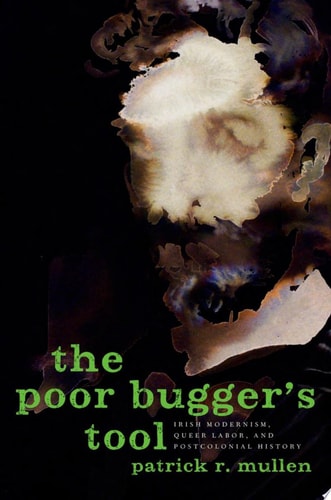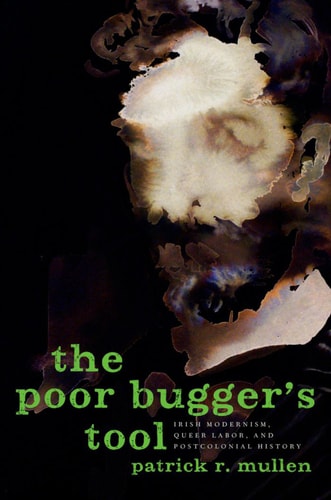
The Poor Bugger's Tool: Irish Modernism, Queer Labor, and Postcolonial History
0
0
As an Amazon Associate and affiliate partner, Menrva Books earns from qualifying purchases. Learn more
Author Description
With the weakening moral authority of the Catholic Church, the boom ushered in by the Celtic Tiger, and the slow but steady diminishment of the Troubles in the North, Ireland has finally stepped out from the shadows of colonial oppression onto the world stage as a major cosmopolitan country. Taking its title from a veiled reference to Roger Casement-the humanitarian and Irish patriot hanged for treason-in James Joyce's Ulysses, The Poor Bugger's Tool demonstrates how the affective labor of Irish queer culture might contribute to a progressive new national image for the Republic and Northern Ireland. Looking back to the first wave of Irish modernism in the works of Wilde, Synge, Casement, and Joyce, Patrick Mullen reveals how these authors deployed queer aesthetics to shape inclusive forms of national affiliation as well as to sharpen anti-imperialist critiques. In its second half, the monograph turns its attention to Ireland's postmodernist boom in the works of Patrick McCabe, Neil Jordan, and Jamie O'Neill. With readings of The Butcher Boy, Breakfast on Pluto, and At Swim Two Boys, Mullen shows that queer sensibilities and style remain key cultural resources for negotiating the political and economic realities of globalization at the turn of the twenty-first century. Buttressed by writings of theorists like Marx, Foucault, and Antonio Negri, The Poor Bugger's Tool brings Irish literature into a fruitful dialog with queer theory, postcolonial studies, the history of sexuality, and modernist aesthetics.
Menrva's Summary
THE THESIS
This book investigates how Irish queer culture and aesthetics have functioned as critical tools for navigating national identity, anti-imperialist critique, and the economic shifts of globalization. Patrick R. Mullen, a scholar of Irish literature and queer theory, utilizes a framework that bridges the early twentieth-century modernist period with the postmodernist boom of the Celtic Tiger era. By synthesizing the works of canonical authors like James Joyce and Oscar Wilde with contemporary figures such as Patrick McCabe and Neil Jordan, the author argues that queer labor provides a vital, alternative perspective on the development of the Irish state and its postcolonial trajectory.
THE SCOPE MAP
What You Will Find
- Analysis of the first wave of Irish modernism including works by Wilde, Synge, Casement, and Joyce.
- Examination of postmodernist Irish literature from authors such as Patrick McCabe, Neil Jordan, and Jamie O'Neill.
- Theoretical application of concepts from Marx, Foucault, and Antonio Negri to literary texts.
- Exploration of the intersection between queer aesthetics, national affiliation, and the economic realities of the Celtic Tiger.
THE AUTHORITY PERSPECTIVE
Scholars in the fields of Irish studies and queer theory recognize this text as a significant contribution to the understanding of how marginalized identities shape national narratives. Readers frequently note the academic density of the prose and the rigorous interdisciplinary approach employed by the author.
Page Count:
219
Publication Date:
2012-01-01
Publisher:
Oxford University Press
ISBN-10:
0199996415
ISBN-13:
9780199996414
History
English
Irish Studies
Cultural History
Literary Criticism
English & College Success
Authors english
Queer Theory
Modernism
European History
Ireland
Community Tags
Similar Books