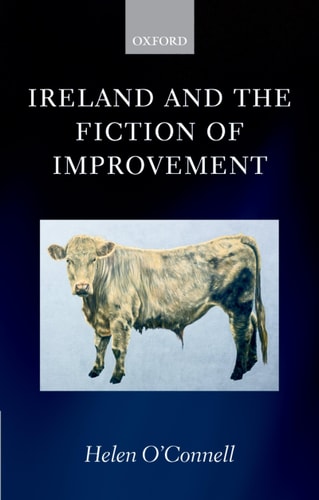
Ireland and the Fiction of Improvement
0
0
As an Amazon Associate and affiliate partner, Menrva Books earns from qualifying purchases. Learn more
Author Description
This is the first study of Irish improvement fiction, a neglected genre of nineteenth-century literary, social, and political history. It shows how the fiction of Mary Leadbeater, Charles Bardin, Martin Doyle, and William Carleton attempted to lure the reader away from popular genres such as fantasy, romance, and "radical" political tracts by demonstrating the value of hard work, frugality, and sobriety in a rigorously realistic mode, representing the contentment that inheres in a plain social order free of excess and embellishment. Improvement discourse defined itself in opposition to the perceived excesses of both revolutionary politics and romantic poetry, seeking (but failing) to demonstrate how both political discontent and unhappiness could be offset by a strict practicality and prosaic realism. The improved societies depicted in these fictional pamphlets are the expression of a counter-revolutionary liberalism and correspond to representations of social stability in the emerging English realist novel. These issues are examined in chapters exploring the career of William Carleton; peasant "orality"; educational provision in the post-Union period; the Irish language; secret society violence; and the Irish revival.Helen O'Connell argues that improvement discourse is embedded in the literary mainstream of nineteenth-century Ireland, from the "oral" peasant narratives of William Carleton to Young Ireland nationalism. In addition, she shows how the cultural revival of the late nineteenth and early twentieth centuries emerged in reaction to the modernizing discourse of improvement. While uncovering previously neglected material, this study sheds new light on the work of Maria Edgeworth, Mary Leadbeater, William Carleton, Thomas Davis, Charles Gavan Duffy, Douglas Hyde, J. M. Synge, and W.B. Yeats.
Menrva's Summary
THE THESIS
This study investigates the neglected genre of nineteenth-century Irish improvement fiction and its role in shaping social, political, and literary discourse. Helen O'Connell, an expert in Irish literature, analyzes how authors like Mary Leadbeater and William Carleton utilized a rigorously realistic mode to promote values of hard work, frugality, and sobriety. The book argues that this improvement discourse functioned as a counter-revolutionary liberal project, attempting to replace political discontent and romantic excess with a prosaic, stable social order.
THE SCOPE MAP
What You Will Find
- Analysis of nineteenth-century Irish improvement literature and its influence on the emerging English realist novel.
- Examination of the tension between improvement discourse and popular genres like fantasy and romance.
- Exploration of thematic intersections including peasant orality, secret society violence, and post-Union educational provision.
- Critical reassessment of major figures such as Maria Edgeworth, William Carleton, and the later Irish revivalists like W.B. Yeats.
THE AUTHORITY PERSPECTIVE
Scholars recognize this work as a significant contribution to the study of Irish literary history, particularly for its focus on previously overlooked didactic texts. Readers frequently note the academic density of the prose and the depth of the author's research into the intersection of political ideology and narrative form.
Page Count:
240
Publication Date:
2006-11-23
Publisher:
Oxford University Press
ISBN-10:
0199286469
ISBN-13:
9780199286461
History
English
Nineteenth century
Political History
Criticism history
Literary Criticism
Irish Studies
English & College Success
Ireland
Social History
Community Tags
Similar Books