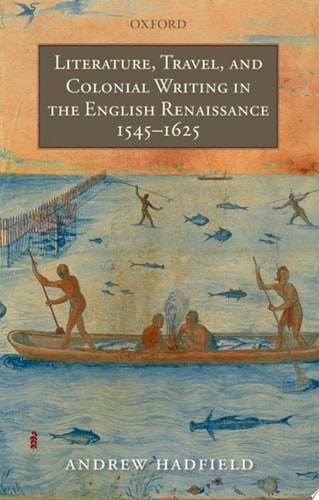
Literature, Travel and Colonial Writing in the English Renaissance, 1545-1625
0
0
As an Amazon Associate and affiliate partner, Menrva Books earns from qualifying purchases. Learn more
Author Description
What was the purpose of representing foreign lands for writers in the English Renaissance? This innovative and wide-ranging study argues that writers often used their works as vehicles to reflect on the state of contemporary English politics. It examines fictional and non-fictional writings, illustrating how early modern readers made close connections between the two, and the problems involved in assuming that we can make sense of the past with the categories available to us.
Menrva's Summary
THE THESIS
This study investigates the strategic function of travel literature in the English Renaissance and how authors utilized depictions of foreign territories to critique domestic political conditions. Andrew Hadfield, a scholar of early modern literature, analyzes a diverse corpus of texts to demonstrate that the boundary between factual travel accounts and imaginative literature was porous for contemporary readers. He argues that these writings served as essential tools for political discourse, challenging modern historians to reconsider the analytical categories applied to early modern texts.
THE SCOPE MAP
What You Will Find
- Analysis of English travel narratives and imaginative literature from 1545 to 1625.
- Examination of the intersection between colonial expansion and domestic political commentary.
- Methodological critique of applying modern historiographical categories to early modern texts.
- Comparative study of fictional and non-fictional accounts of foreign lands.
THE AUTHORITY PERSPECTIVE
Scholars recognize this work as a significant contribution to the study of early modern political thought and the development of English colonial identity. The text is frequently cited for its rigorous approach to the relationship between literary form and political context in the Renaissance period.
Page Count:
328
Publication Date:
1999-02-25
Publisher:
Clarendon Press
ISBN-10:
0198184808
ISBN-13:
9780198184805
History
Colonialism
Literary Criticism
Travel Writing
Renaissance
English literature
In literature
Criticism history
Community Tags
Similar Books