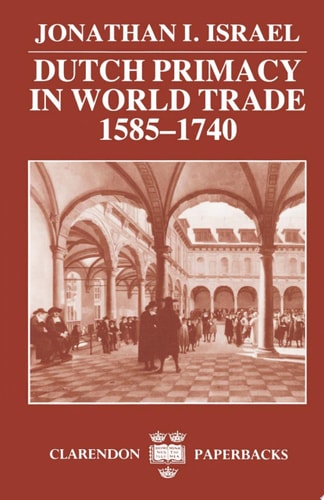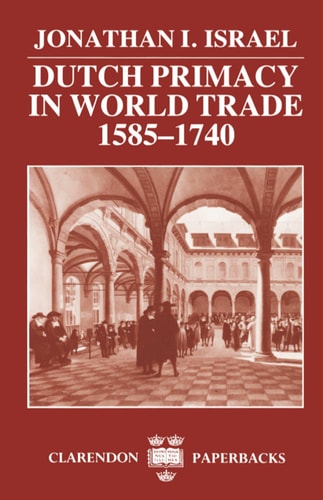
Dutch Primacy in World Trade, 1585-1740
0
0
As an Amazon Associate and affiliate partner, Menrva Books earns from qualifying purchases. Learn more
Author Description
The Dutch Republic, despite its small size and population, functioned as the hub of world trade, shipping, and finance for over a century following the fall of Antwerp in 1585. This is the first general account of Dutch world-trade hegemony in all its aspects from its origins as a depot for "bulk-carrying" in the fifteenth and sixteenth centuries to its collapse in the eighteenth century.
Menrva's Summary
THE THESIS
This work investigates the mechanisms and historical trajectory that allowed the Dutch Republic to establish and maintain global commercial hegemony between 1585 and 1740. Professor Jonathan I. Israel, a renowned historian of early modern Europe, utilizes extensive archival research and economic data to argue that Dutch dominance was not merely a result of shipping capacity, but a complex integration of finance, international trade networks, and geopolitical maneuvering. The text provides a comprehensive framework for understanding how a small nation functioned as the central hub of the global economy before its eventual decline in the eighteenth century.
THE SCOPE MAP
What You Will Find
- Analysis of the transition from regional bulk-carrying to global trade dominance.
- Examination of the financial and institutional structures supporting the Dutch Republic.
- Historical evaluation of the impact of the fall of Antwerp on European trade routes.
- Detailed study of the rise and eventual collapse of Dutch commercial supremacy.
THE AUTHORITY PERSPECTIVE
Historians and scholars of early modern economics frequently cite this text as a foundational reference for understanding the Dutch Golden Age. Readers often note the academic density of the prose, which provides a rigorous and exhaustive examination of the period's economic complexities.
Page Count:
488
Publication Date:
1990-09-13
Publisher:
Clarendon Press
ISBN-10:
0198211392
ISBN-13:
9780198211396
History
Economics
Maritime history
Netherlands history
Trade
European History