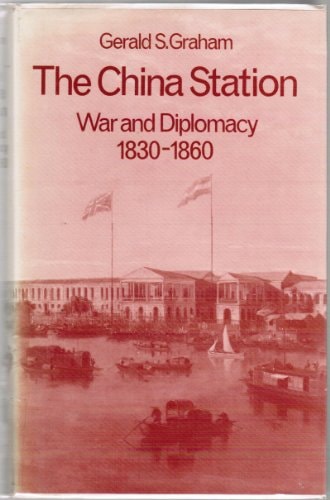
The China Station: War and Diplomacy, 1830-1860
0
0
As an Amazon Associate and affiliate partner, Menrva Books earns from qualifying purchases. Learn more
Author Description
Deals not only with the details of the amphibious warfare which led to the capture of Peking, but also with European rivalries, American trade competition, major crises such as the Crimean War and the Indian Mutiny, internal conditions in China, and missionary enterprise.
Menrva's Summary
THE THESIS
This work investigates the strategic role of the British Royal Navy's China Station in projecting imperial power and managing geopolitical instability during the mid-nineteenth century. Gerald S. Graham, a noted historian of maritime and imperial affairs, utilizes extensive archival records and official correspondence to analyze how naval presence influenced trade, diplomacy, and conflict in East Asia. The book argues that the China Station served as the primary instrument for maintaining British hegemony amidst shifting European alliances and internal Chinese upheaval.
THE SCOPE MAP
What You Will Find
- Detailed accounts of amphibious military operations during the Opium Wars and the eventual capture of Peking.
- Analysis of the intersection between naval strategy and commercial interests in the treaty ports.
- Examination of the impact of global events, including the Crimean War and the Indian Mutiny, on regional stability.
- Primary source documentation regarding missionary activities and diplomatic negotiations between Western powers and the Qing dynasty.
THE AUTHORITY PERSPECTIVE
Historians recognize this text as a foundational study of nineteenth-century naval diplomacy and the mechanics of British imperial expansion in the Far East. Scholars frequently cite Graham's work for its meticulous integration of military logistics with the broader context of international trade competition.
Page Count:
444
Publication Date:
1978-12-14
Publisher:
Oxford University Press
ISBN-10:
0198224729
ISBN-13:
9780198224723
History
Asian History
Diplomatic History
International relations
Military History
Great Britain
Community Tags
Similar Books