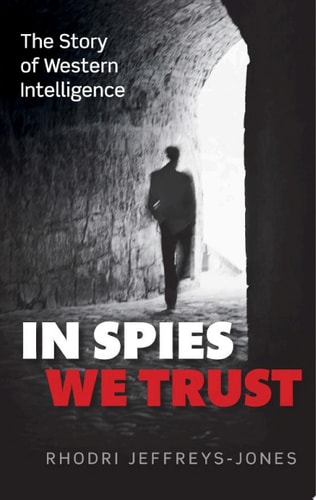
In Spies We Trust: The Story of Western Intelligence
0
0
As an Amazon Associate and affiliate partner, Menrva Books earns from qualifying purchases. Learn more
Author Description
In Spies We Trust reveals the full story of the Anglo-American intelligence relationship - ranging from the deceits of World War I to the mendacities of 9/11 - for the first time. Why did we ever start trusting spies? It all started a hundred years ago. First we put our faith in them to help win wars, then we turned against the bloodshed and expense, and asked our spies instead to deliver peace and security. By the end of World War II, Britain and America were cooperating effectively to that end. At its peak in the 1940s and 1950s, the 'special intelligence relationship' contributed to national and international security in what was an Anglo-American century. But from the 1960s this 'special relationship' went into decline. Britain weakened, American attitudes changed, and the fall of the Soviet Union dissolved the fear that bound London and Washington together. A series of intelligence scandals along the way further eroded public confidence. Yet even in these years, the US offered its old intelligence partner a vital gift: congressional attempts to oversee the CIA in the 1970s encouraged subsequent moves towards more open government in Britain and beyond. So which way do we look now? And what are the alternatives to the British-American intelligence relationship that held sway in the West for so much of the twentieth century? Rhodri Jeffreys-Jones shows that there are a number - the most promising of which, astonishingly, remain largely unknown to the Anglophone world.
Menrva's Summary
THE THESIS
This book investigates the historical evolution, peak, and subsequent decline of the Anglo-American intelligence relationship over the past century. Rhodri Jeffreys-Jones, a prominent historian of intelligence, utilizes archival research and historical analysis to trace how the partnership between Britain and the United States shifted from wartime necessity to a complex, often strained, geopolitical alliance. The author argues that while the 'special relationship' was instrumental in twentieth-century security, its relevance has waned due to shifting global power dynamics and repeated intelligence scandals.
THE SCOPE MAP
What You Will Find
- A chronological history of Anglo-American intelligence cooperation from World War I through the post-9/11 era.
- Analysis of the impact of the Cold War and the dissolution of the Soviet Union on intelligence sharing.
- Examination of the 1970s congressional oversight of the CIA and its influence on British government transparency.
- Discussion of alternative intelligence frameworks for the modern era.
Scope Limits
- The text focuses primarily on the bilateral relationship between the UK and the US, rather than a comprehensive global history of intelligence agencies.
- It does not provide a technical manual on intelligence gathering methods or tradecraft.
THE AUTHORITY PERSPECTIVE
Experts in the field of intelligence studies recognize this work as a significant contribution to understanding the political and institutional history of the Anglo-American alliance. Readers frequently note the accessible yet scholarly tone, which balances detailed historical narrative with critical analysis of policy outcomes.
Page Count:
305
Publication Date:
2013-01-01
Publisher:
OUP Oxford
ISBN-10:
0191651710
ISBN-13:
9780191651717
Non-Fiction
History
United States
Espionage British
Great Britain
International relations
Military History
Modern History
Community Tags
Similar Books