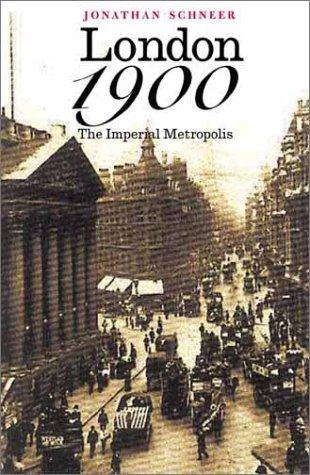
London 1900
0
0
As an Amazon Associate and affiliate partner, Menrva Books earns from qualifying purchases. Learn more
Author Description
London in 1900 was the greatest city on earth -- the capital of an empire on which the sun never set. This book is the first to examine this powerful and influential city at the turn of the century and to invesitgate its relationship with Britain's far-flung empire. JonathanSchneer focuses on the diverse, contentious, contradictory personalities of London and its inhabitants, showing the many ways that the empire impinged on them. He describes how a range of citizens -- from architects to zoologists, from financiers to striking dockers -- helped to define and shape the imperial metropolis. He also shows how the city was influenced by people other than native-born male Anglo-Saxons. Schneer traces the attempts of some of these overlooked peoples to delineate its boundaries: four extraordinary women -- two political hostesses, a journalist, and an explorer-ethnologist -- as well as anti-imperialist Irish, South Asians, West Indians, and Africans living in London at this time. In a concluding chapter, Schneer examines the general election of 1900 in London, in which the ruling Conservative government successfully defended its imperialist policies. The people of London, says Schneer, made their city and continually remade and reshaped it -- as they continue to do today. - Jacket flap.
Menrva's Summary
THE THESIS
London in 1900 stood as the undisputed center of a global empire, a metropolis grappling with its imperial identity and the diverse populations within its borders. Jonathan Schneer's work examines this pivotal city, focusing on the complex personalities and societal forces that shaped both London and the British Empire. He investigates how various citizens, from professionals to laborers, contributed to the imperial capital's definition, while also highlighting the influence of marginalized groups, including women, Irish, South Asians, West Indians, and Africans residing in London. The book culminates with an analysis of the 1900 general election, underscoring the city's role in solidifying imperialist policies.
THE SCOPE MAP
- What You Will Find:
- An examination of London as the capital of the British Empire in 1900.
- Analysis of the diverse and often contradictory personalities of London's inhabitants.
- Exploration of how the empire impinged upon the lives of Londoners.
- Portraits of various citizens, including architects, zoologists, financiers, and dockers, and their roles in shaping the imperial metropolis.
- Inclusion of overlooked peoples, such as four prominent women, anti-imperialist Irish, South Asians, West Indians, and Africans living in London.
- A concluding chapter on the 1900 general election and the defense of imperialist policies.
THE AUTHORITY PERSPECTIVE
The book is recognized for its detailed examination of London at the turn of the 20th century, particularly its intricate relationship with the British Empire. Schneer's focus on the diverse and often contentious personalities within the city provides a nuanced perspective on imperial urbanism. The inclusion of marginalized voices, such as women and various ethnic groups, offers a more comprehensive understanding of the imperial metropolis. The analysis of the 1900 general election serves to contextualize the political climate and the public's engagement with imperial policies.
Page Count:
352
Publication Date:
2001-01-01
ISBN-10:
0300089031
ISBN-13:
9780300089035
Non-Fiction
History
Politics
Social History
Urban History
British Empire
Community Tags
Similar Books