The Lyric Journey
0
0
As an Amazon Associate and affiliate partner, Menrva Books earns from qualifying purchases. Learn more
Author Description
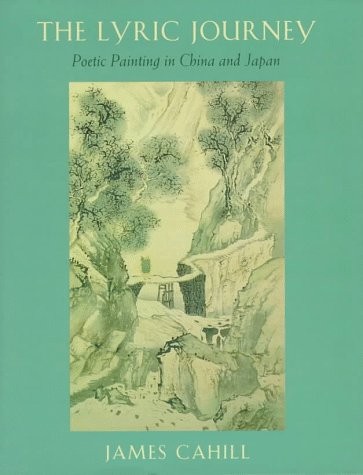
Poetic paintings - works done in response to lyric poems, or else as pictorial equivalents to them - compose a major category of East Asian art. In this beautifully illustrated book James Cahill looks at three exemplary traditions in this genre, works from three very different times and places, bringing new understanding of the paintings and of the relationship between the art and the societies that produced it. Creating paintings with poetic resonances, sometimes with ties to specific lines of poetry, is a practice that began in China in the eleventh century, the Northern Sung period. Cahill vividly surveys its first great flowering among artists working in the Southern Sung capital of Hangchou, probably the largest and certainly the richest city on earth in this era. He shows us the revival of poetic painting by late Ming artists working in the prosperous city of Suchou. And we learn how artists in Edo-period Japan, notably the eighteenth-century Nanga masters and the painter and haiku poet Yosa Buson, transformed the style into a uniquely Japanese vehicle of expression. In all cases, Cahill shows, poetic painting flourished in crowded urban environments, it accompanied an outpouring of poetry celebrating the pastoral, escape from the city, immersion in nature. An ideal of the return to a life close to nature - the "lyric journey" - underlies many of the finest, most moving paintings of China and Japan, and offers a key for understanding them.
Menrva's Summary
THE THESIS
This book investigates the historical development and cultural significance of poetic painting traditions in East Asia. James Cahill, an art historian, examines three distinct periods and regions: the Northern Sung dynasty in China, the late Ming dynasty in Suchou, and Edo-period Japan. He explores how artists in these urban centers created paintings that resonated with lyric poetry, often celebrating an idealized return to nature, and how these works reflect the societies that produced them.
THE SCOPE MAP
- What You Will Find:
- Poetic painting traditions from 11th-century China (Northern Sung period).
- Poetic painting revival by late Ming artists in Suchou.
- Transformation of poetic painting into a Japanese expression during the Edo period, featuring Nanga masters and Yosa Buson.
- Analysis of the relationship between art, poetry, and the societies that produced them.
- The underlying ideal of the
- THE AUTHORITY PERSPECTIVE
- This book is recognized for its scholarly examination of a significant category of East Asian art. Cahill's work is noted for bringing new understanding to the paintings and their societal contexts. The analysis focuses on the interplay between visual art and poetry, particularly the theme of the 'lyric journey' as a key to interpretation. The book is considered an important contribution to the study of Chinese and Japanese art history.
- description
- Poetic paintings
- works done in response to lyric poems, or else as pictorial equivalents to them
- compose a major category of East Asian art. In this beautifully illustrated book James Cahill looks at three exemplary traditions in this genre, works from three very different times and places, bringing new understanding of the paintings and of the relationship between the art and the societies that produced it.
- the "lyric journey"
- underlies many of the finest, most moving paintings of China and Japan, and offers a key for understanding them.
- series_name
- series_number
- 0
- language
- en
- age_rating
- ADULT
- age_rating_confidence
- 0.8
- corrected_title
- The Lyric Journey
- publication_date
- 1996-01-01
- publication_date_confidence
- 1.0
- corrected_isbn13
- isbn_confidence
- 0.0
- external
THE AUTHORITY PERSPECTIVE
This book is recognized for its scholarly examination of a significant category of East Asian art. Cahill's work is noted for bringing new understanding to the paintings and their societal contexts. The analysis focuses on the interplay between visual art and poetry, particularly the theme of the 'lyric journey' as a key to interpretation. The book is considered an important contribution to the study of Chinese and Japanese art history.
Page Count:
251
Publication Date:
1996-01-01
ISBN-10:
0674539702
Poetry
History
Non-Fiction
Art
Art History
Painting
Community Tags
Similar Books