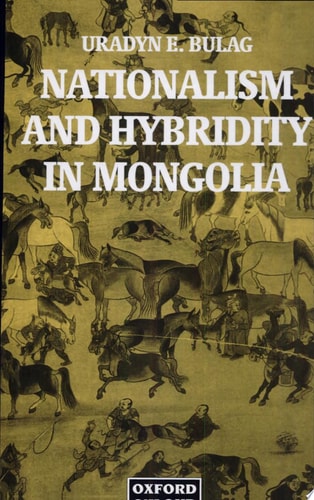
Nationalism and Hybridity in Mongolia
0
0
As an Amazon Associate and affiliate partner, Menrva Books earns from qualifying purchases. Learn more
Author Description
In this unique and important study of what it means to be a Mongolian in today's world, Dr. Uradyn E. Bulag draws on a vast amount of illuminating research to argue that all Mongols are in fact confronted with a choice between a purist, racialized nationalism (which they inherited from the Soviet discourses of the past) and a more open, adaptive, and inclusive nationalism (which would accept diversity, hybridity, and multiculturalism). The book calls into question the idea of Mongolia as a homogeneous place and people, and urges that unity be sought through a country-wide acknowledgment of diversity.
Menrva's Summary
THE THESIS
This book investigates the tension between purist, racialized nationalism and inclusive, hybrid identity within the context of post-socialist Mongolia. Dr. Uradyn E. Bulag, a scholar with expertise in social anthropology and postcolonial theory, utilizes extensive fieldwork conducted in Ulaanbaatar and other regions to examine how Mongolian identity has been constructed and contested. He argues that the nation faces a critical choice between maintaining a rigid, Soviet-inherited definition of nationality or embracing a more adaptive, multicultural framework that acknowledges the diversity of its ethnic groups.
THE SCOPE MAP
What You Will Find
- Historical analysis of the Soviet-era construction of a unitary Mongolian nationality.
- Ethnographic fieldwork conducted in Ulaanbaatar and various regional sites.
- Theoretical application of British social anthropology and postcolonial discourse.
- Examination of the cultural politics surrounding the transition from socialism to a modern, diverse state.
THE AUTHORITY PERSPECTIVE
Scholars and reviewers frequently highlight this work as a significant contribution to the study of identity politics and post-socialist transitions. Experts note the academic rigor of the text, describing it as a foundational resource for understanding the complex intersection of history, ethnicity, and nationalism in Central Asia.
Page Count:
320
Publication Date:
1998-01-01
Publisher:
Oxford University Press
ISBN-10:
0198233574
ISBN-13:
9780198233572
History
Sociology
Mongols
Anthropology
Nationalism
Mongolia
Community Tags
Similar Books