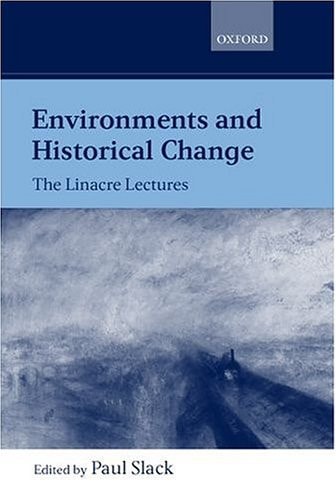
Environments and Historical Change: The Linacre Lectures
0
0
As an Amazon Associate and affiliate partner, Menrva Books earns from qualifying purchases. Learn more
Author Description
Present anxieties about global warming and threats to biodiversity leave no doubts that environmental changes impact upon humans. Perceptions of the environment change as people try to define and shape 'nature' in different ways. The book explores the relationship between environmental change and society from the last Ice Age to the present. The book examines the environmental impact of fluctuations in climate and the demand for energy, and the patters which human societies have imposed on their surroundings, from boundaries to the cultural projections of legends and film. Together they show how insights from the disciplines of geography and geography, history and anthropology, can throw fresh light on the long-term attachment of people to place. The chapters in this book were originally delivered as Linacre Lectures at Linacre College, Oxford University.
Menrva's Summary
THE THESIS
How have human societies interacted with and perceived environmental shifts from the last Ice Age to the modern era? Paul Slack, an esteemed historian, compiles a series of scholarly lectures delivered at Linacre College, Oxford, to examine the reciprocal relationship between environmental change and human development. By synthesizing perspectives from geography, history, and anthropology, the text argues that environmental impact is not merely a physical phenomenon but a cultural construct shaped by human perception and societal demand.
THE SCOPE MAP
What You Will Find
- Analysis of environmental impacts resulting from climate fluctuations and energy consumption patterns.
- Historical examination of human-imposed boundaries and land management strategies.
- Cultural studies regarding the projection of nature through legends, film, and societal narratives.
- Interdisciplinary methodology combining geography, history, and anthropology to understand long-term human attachment to place.
THE AUTHORITY PERSPECTIVE
Experts recognize this collection as a valuable interdisciplinary resource for understanding the historical trajectory of human-environment relations. Readers frequently note the academic rigor of the lectures, which provide a nuanced framework for analyzing contemporary environmental anxieties through a long-term historical lens.
Page Count:
208
Publication Date:
2000-02-03
Publisher:
Oxford University Press
ISBN-10:
0198233884
ISBN-13:
9780198233886
History
Geography
Anthropology
Sociology
Community Tags
Similar Books