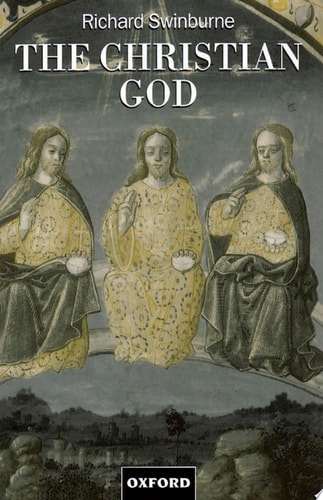
The Christian God
0
0
As an Amazon Associate and affiliate partner, Menrva Books earns from qualifying purchases. Learn more
Author Description
What is it for there to be a God, and what reason is there for supposing him to conform to the claims of Christian doctrine? In this pivotal volume of his tetralogy, Richard Swinburne builds a rigorous metaphysical system for describing the world, and applies this to assessing the worth of the Christian tenets of the Trinity and the Incarnation. Part I is dedicated to analyzing the categories needed to address accounts of the divine nature--substance, cause, time, and necessity. Part II begins by setting out, in terms of these categories, the fundamental doctrine of Western religions--that there is a God. After pointing out some of the different ways in which this doctrine can be developed, Swinburne spells out the simplest possible account of divine nature. He then goes on to clarify the implications of this account for the specifically Christian doctrines of the Trinity (that God is "three persons in one substance") and of the Incarnation (that God became incarnate in Jesus Christ). Swinburne finds that there are good reasons to believe the Christian additions to the core Western idea of God. The Christian God builds upon Swinburne's acclaimed previous work to form a self-contained text which will no doubt become a classic in the philosophy of religion.
Menrva's Summary
THE THESIS
This volume investigates the logical coherence of the Christian concept of God and the rational justification for accepting specific doctrines such as the Trinity and the Incarnation. Richard Swinburne, a prominent philosopher of religion, utilizes a rigorous metaphysical framework to define the nature of the divine. By applying analytical categories like substance, cause, and necessity, he constructs a systematic argument that evaluates the probability and internal consistency of Christian theological claims within a broader Western religious context.
THE SCOPE MAP
What You Will Find
- A metaphysical analysis of divine attributes including substance, time, and necessity.
- A systematic evaluation of the doctrines of the Trinity and the Incarnation.
- A logical assessment of the simplest possible account of divine nature.
- A philosophical defense of Christian tenets as rational additions to the core concept of God.
THE AUTHORITY PERSPECTIVE
Scholars and students of philosophy of religion frequently cite this work for its high level of analytical rigor and systematic approach to complex theological problems. Readers often note the academic density of the prose, which requires careful attention to the author's specific metaphysical definitions and logical structures.
Page Count:
272
Publication Date:
1994-11-24
Publisher:
Clarendon Press
ISBN-10:
0198235127
ISBN-13:
9780198235125
Philosophy
Religion
God
Metaphysics
Christian Theology
Trinity
Apologetics
Community Tags
Similar Books