Was Jesus God?
0
0
As an Amazon Associate and affiliate partner, Menrva Books earns from qualifying purchases. Learn more
Author Description
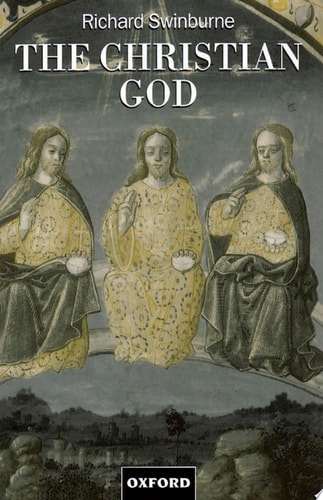
The orderliness of the universe and the existence of human beings already provides some reason for believing that there is a God - as argued in Richard Swinburne's earlier book Is There a God? Swinburne now claims that it is probable that the main Christian doctrines about the nature of God and his actions in the world are true. In virtue of his omnipotence and perfect goodness, God must be a Trinity, live a human life in order to share our suffering, and found a church which would enable him to tell all humans about this. It is also quite probable that he would provide his human life as an atonement for our wrongdoing, teach us how we should live and tell us his plans for our future after death. Among founders of religions, Jesus satisfies uniquely well the requirement of living the sort of human life which God would need to have lived. But to give us adequate reason to believe that Jesus was God, God would need to put his 'signature' on the life of Jesus by an act which he alone could do, for example raise him from the dead. There is adequate historical evidence that Jesus rose from the dead. The church which he founded gave plausible interpretations of his basic message. Therefore Christian doctrines are probably true.
Menrva's Summary
THE THESIS
This work investigates the logical probability that the central doctrines of Christianity, specifically the divinity of Jesus, are true based on philosophical and historical reasoning. Richard Swinburne, a prominent philosopher of religion, utilizes a framework of Bayesian probability and natural theology to argue for the coherence of Christian belief. Building upon his previous work regarding the existence of a deity, he posits that an omnipotent and perfectly good God would logically act to share human suffering and provide atonement. The text systematically evaluates the historical and metaphysical evidence supporting the claim that Jesus of Nazareth uniquely fulfills the requirements of such a divine incarnation.
THE SCOPE MAP
What You Will Find
- A philosophical argument for the Trinity based on the nature of divine perfection.
- An application of probability theory to historical claims regarding the resurrection of Jesus.
- An analysis of the necessity of atonement and divine revelation within a Christian framework.
Scope Limits
- The text does not provide an exhaustive historical biography of Jesus.
- It does not address comparative religious studies or non-Christian theological perspectives in depth.
THE AUTHORITY PERSPECTIVE
Scholars and readers frequently note the rigorous analytical density of Swinburne's prose, which applies formal logic to traditional theological questions. Experts highlight this as a significant contribution to contemporary analytic philosophy of religion, particularly for those interested in the intersection of probability theory and Christian apologetics.
Page Count:
187
Publication Date:
2010-01-01
Publisher:
OUP Oxford
ISBN-10:
0191623458
ISBN-13:
9780191623455
Religion
Philosophy
Metaphysics
Apologetics
Christian Theology
Philosophy of
Incarnation