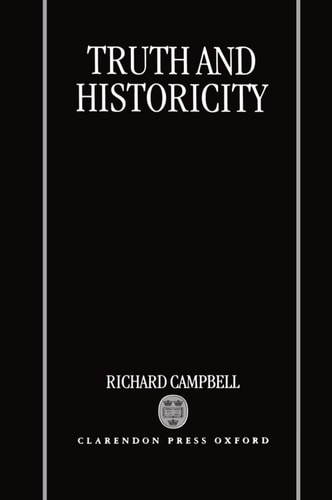
Truth and Historicity
0
0
As an Amazon Associate and affiliate partner, Menrva Books earns from qualifying purchases. Learn more
Author Description
In this scholarly but non-technical book, Campbell elucidates the concept of truth by tracing its history, from the ancient Greek idea that truth is timeless, unchanging, and free from all relativism, through the seventeenth-century crisis which led to the collapse of that idea, and then on through the emergence of historical consciousness to the existentialist, sociological, and linguistic approaches of our own time. He gives a scholarly but vivid and economical exposition of the views of a remarkably wide range of thinkers, always showing how their ideas engage with our contemporary concerns. He argues that current problems with truth arise from the way differing past conceptions continue to resound in our contemporary use of the word, and suggests that we must formulate a new conception of truth that is compatible with awareness that human existence is finite and contingent--with awareness of our own historicity.
Menrva's Summary
THE THESIS
This book investigates the evolving definition of truth by examining how historical shifts in human consciousness have fundamentally altered our understanding of reality. Richard Campbell, a scholar of philosophy, synthesizes centuries of intellectual history to demonstrate that our current confusion regarding truth stems from the accumulation of conflicting past definitions. He argues that modern thinkers must reconcile the concept of truth with the reality of human finitude and historical contingency.
THE SCOPE MAP
What You Will Find
- A chronological survey of truth from ancient Greek philosophy to contemporary existentialist and linguistic theories.
- An analysis of the seventeenth-century intellectual crisis that dismantled the notion of timeless, unchanging truth.
- A critical examination of how sociological and linguistic frameworks have reshaped modern discourse.
- A proposed methodology for formulating a new, historically aware conception of truth.
THE AUTHORITY PERSPECTIVE
Experts recognize this work as a highly accessible synthesis of complex philosophical traditions that avoids unnecessary academic jargon. Readers frequently note that the text serves as a valuable resource for those seeking to understand the historical roots of contemporary debates surrounding truth and relativism.
Page Count:
480
Publication Date:
1992-11-19
Publisher:
Clarendon Press
ISBN-10:
0198239270
ISBN-13:
9780198239277
History
Philosophy
Intellectual History
History
Truth
Epistemology
Community Tags
Similar Books