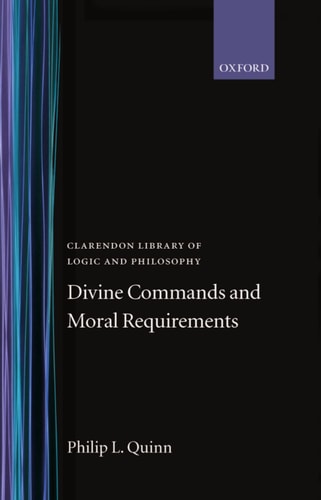
Divine Commands and Moral Requirements
0
0
As an Amazon Associate and affiliate partner, Menrva Books earns from qualifying purchases. Learn more
Author Description
In this wide-ranging study, Quinn argues that human moral autonomy is compatible with unqualified obedience to divine commands. He formulates several versions of the crucial assumptions of divine command ethics, defending them against a battery of objections often expressed in the philosophical literature.
Menrva's Summary
THE THESIS
This work investigates whether the concept of human moral autonomy can be reconciled with the theological requirement of absolute obedience to divine commands. Philip L. Quinn, a noted philosopher of religion, utilizes analytical methods to construct a framework for divine command ethics. He systematically addresses common philosophical critiques, arguing that theistic moral obligations do not inherently negate individual agency or rational moral decision-making.
THE SCOPE MAP
What You Will Find
- Formal logical formulations of divine command theory
- Analysis of the compatibility between autonomy and theological obedience
- Rebuttals to standard secular and philosophical objections
- Examination of moral requirements within theistic frameworks
THE AUTHORITY PERSPECTIVE
Experts in the field of philosophy of religion recognize this text as a rigorous, foundational contribution to the debate surrounding meta-ethics and theism. Readers frequently note the academic density of the prose, which requires a strong background in analytic philosophy to fully grasp the author's logical arguments.
Page Count:
176
Publication Date:
1978-10-26
Publisher:
Clarendon Press
ISBN-10:
0198244134
ISBN-13:
9780198244134
Philosophy
Religion
Theology
Logic
Ethics
Community Tags
Similar Books