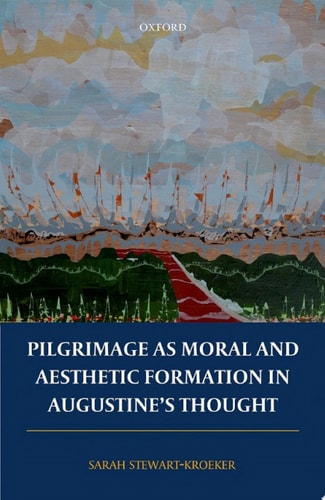
Pilgrimage as Moral and Aesthetic Formation in Augustine's Thought
0
0
As an Amazon Associate and affiliate partner, Menrva Books earns from qualifying purchases. Learn more
Author Description
Augustine's dominant image for the human life is peregrinatio, which signifies at once a journey to the homeland (a pilgrimage) and the condition of exile from the homeland. For Augustine, all human beings are, in the earthly life, exiles from their true homeland: heaven. Some, but not all, become pilgrims seeking a way back to the heavenly homeland, a return mediated by the incarnate Christ. Becoming a pilgrim begins with attraction to beauty. The return journey therefore involves formation, both moral and aesthetic, in loving rightly. This image has occasioned a lot of angst in ethical thought in the last century. Augustine's vision of Christian life as a pilgrimage, his critics allege, casts a pall of groaning and longing over this life in favor of happiness in the next. Augustine's eschatological orientation robs the world of beauty and ethics of urgency. In Pilgrimage as Moral and Aesthetic Formation in Augustine's Thought, Sarah Stewart-Kroeker responds to Augustine's critics by elaborating the Christological continuity between the earthly journey and the eschatological home. Through this cohesive account of pilgrimage as a journey toward the right ordering of the desire for beauty and love for God and neighbour, Stewart-Kroeker reveals the integrity of Augustine's vision of moral and aesthetic vision. From the human desire for beauty to the embodied practice of Christian sacraments, Stewart-Kroeker develops an account of the relationship between beauty and morality as the linchpin of an Augustinian moral theology.
Menrva's Summary
THE THESIS
This work investigates whether Augustine's concept of human life as a pilgrimage inherently devalues earthly existence or if it provides a coherent framework for moral and aesthetic development. Sarah Stewart-Kroeker, a scholar of historical theology, examines Augustine's writings to argue that the earthly journey and the eschatological destination are linked through Christology. By analyzing the role of beauty as a catalyst for moral formation, she posits that Augustine's vision integrates love for God and neighbor within the context of an embodied, sacramental life.
THE SCOPE MAP
What You Will Find
- An analysis of the Augustinian concept of 'peregrinatio' as both exile and pilgrimage.
- A theological framework connecting the human desire for beauty to moral action.
- A defense of Augustinian ethics against modern critiques regarding world-denial.
Scope Limits
- The text focuses specifically on Augustine's theological and aesthetic thought rather than a broad survey of medieval pilgrimage practices.
- It does not provide a comprehensive biography of Augustine, focusing instead on his moral theology.
THE AUTHORITY PERSPECTIVE
Scholars in the field of patristics and moral theology recognize this text as a rigorous engagement with the intersection of Augustinian aesthetics and ethics. Readers frequently note the academic density of the prose, which is intended for those familiar with Augustine's primary texts and contemporary theological discourse.
Page Count:
320
Publication Date:
2017-01-01
Publisher:
OUP Oxford
ISBN-10:
0192527177
ISBN-13:
9780192527172
Philosophy
Religion
Christian History
Theology
Aesthetics
Ethics
Community Tags
Other Editions(3)

Similar Books



Reader Comments
Share Your Thoughts
No comments yet. Be the first to share your thoughts!