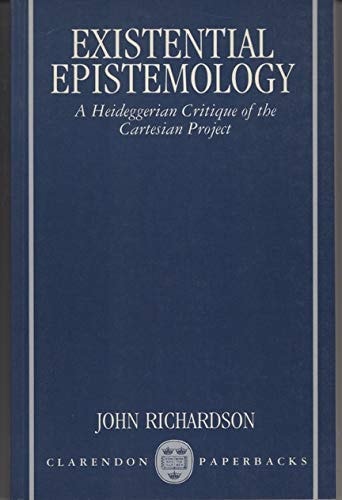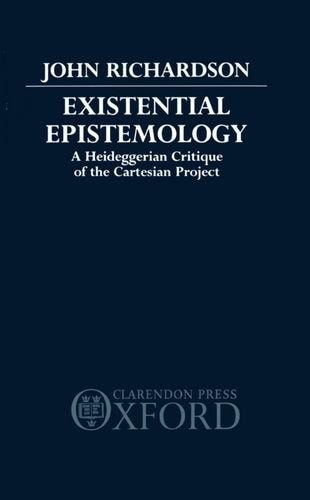
Existential Epistemology: A Heideggerian Critique of the Cartesian Approach
0
0
As an Amazon Associate and affiliate partner, Menrva Books earns from qualifying purchases. Learn more
Author Description
A lucid introduction to the "existential phenomenology" of Martin Heidegger, particularly as developed in his major work, Being and Time, this work focuses on how Heidegger's ideas bear on the central problem in epistemology--that of how we can have objective knowledge. The author constructs fresh arguments clarifying Heidegger's contribution to the theory of knowledge, and shows why Heidegger deemed misguided the search for knowledge of the way things are in themselves.
Menrva's Summary
THE THESIS
This work investigates the fundamental tension between Cartesian epistemology and Heideggerian existential phenomenology regarding the possibility of objective knowledge. John Richardson, a scholar of continental philosophy, utilizes the framework established in Martin Heidegger's Being and Time to challenge the traditional subject-object dichotomy. By analyzing the ontological foundations of human existence, the author argues that the Cartesian pursuit of objective truth is inherently misguided because it ignores the pre-reflective engagement humans have with their world.
THE SCOPE MAP
What You Will Find
- A detailed critique of Cartesian dualism and its influence on modern epistemology.
- An examination of Heideggerian existential phenomenology as a corrective to traditional knowledge theories.
- Analysis of the concept of 'being-in-the-world' and its implications for human understanding.
- Arguments regarding the limitations of seeking knowledge of things as they exist independently of human experience.
THE AUTHORITY PERSPECTIVE
Experts recognize this text as a rigorous contribution to the study of Heideggerian thought, particularly for those interested in the intersection of ontology and epistemology. Readers frequently note the academic density of the prose, which requires a foundational understanding of both Cartesian and Heideggerian terminology to fully grasp the author's arguments.
Page Count:
210
Publication Date:
1987-01-29
Publisher:
Oxford University Press
ISBN-10:
0198249063
ISBN-13:
9780198249061
Philosophy
Existentialism
Knowledge Theory
Epistemology
Phenomenology
Community Tags
Similar Books