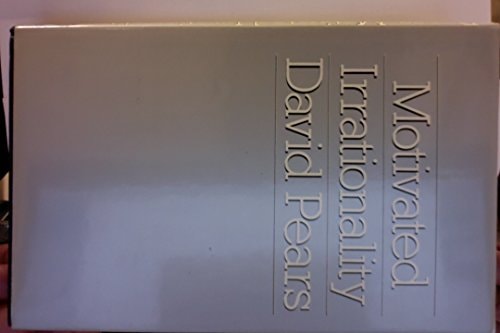
Motivated Irrationality
0
0
As an Amazon Associate and affiliate partner, Menrva Books earns from qualifying purchases. Learn more
Author Description
This book is about self-deception and lack of self-control or wishful thinking and acting against one's own better judgement. Steering a course between the skepticism of philosophers, who find the conscious defiance of reason too paradoxical, and the tolerant empiricism of psychologists, it compares the two kinds of irrationality, and relates the conclusions drawn to the views of Freud, cognitive psychologists, and such philosophers as Aristotle, Anscombe, Hare and Davidson.
Menrva's Summary
THE THESIS
This book investigates the philosophical and psychological mechanisms behind self-deception, wishful thinking, and the phenomenon of acting against one's own better judgment. David Francis Pears, a distinguished philosopher, synthesizes classical philosophical inquiry with modern psychological frameworks to address the paradox of conscious irrationality. He constructs an argument that bridges the gap between the skepticism of traditional philosophy and the empirical observations of cognitive psychology, ultimately providing a structured analysis of how human agents override their own rational faculties.
THE SCOPE MAP
What You Will Find
- A comparative analysis of self-deception and lack of self-control.
- A critical examination of Freudian psychoanalytic theory regarding irrational behavior.
- Integration of classical Aristotelian ethics with contemporary cognitive psychology.
- Philosophical discourse on the works of Anscombe, Hare, and Davidson.
THE AUTHORITY PERSPECTIVE
Experts recognize this work as a significant contribution to the philosophy of mind and action, particularly for its rigorous attempt to reconcile disparate academic traditions. Readers frequently note the academic density of the prose, which requires a foundational understanding of philosophical terminology to fully grasp the author's nuanced arguments.
Page Count:
256
Publication Date:
1984-04-19
Publisher:
Oxford University Press
ISBN-10:
0198246625
ISBN-13:
9780198246626
Philosophy
Non-Fiction
Psychology
Ethics
Community Tags
Similar Books