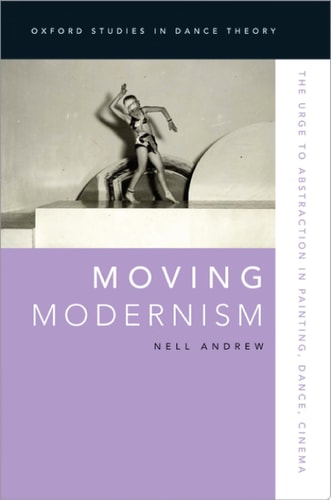
Moving Modernism: The Urge to Abstraction in Painting, Dance, Cinema
0
0
As an Amazon Associate and affiliate partner, Menrva Books earns from qualifying purchases. Learn more
Author Description
The emergence of modern dance and the early history of cinema ran concurrent with the European avant-garde's development of pictorial abstraction in the first decades of the 20th century. However, many assume that modernist abstraction resulted from a century of natural, autonomous evolution to painting styles and tastes. In Moving Modernism, author Nell Andrew challenges this assumption. By examining dance and film created during this period, she argues that performative modes of art created the link between bodily movement and movement depicted in modernist paintings. In a seeming paradox, dance and film - durational arts, involving real bodies in space-participated in the development of abstract art.With archival material collected in North America and Europe, Moving Modernism resurfaces lost performances, identifies working methods, and establishes the circles of aesthetic influence and reception for avant-garde dance pioneers and experimental film makers from the turn of the century to the interwar period. Reexamining the motivation that fueled the emergence of abstraction, Andrew claims that painters sought meaning not only in the material and formal picture but also in temporal and sensorial experience. Andrew looks at major figures and intellectual movements including Loïe Fuller and Symbolism; Valentine de Saint-Point and the Cubo-Futurist and neo-Symbolist movements; and early cinematic abstraction from Edison and the Lumières to Hans Richter and Marcel Duchamp. Close examinations of each figure show that theatrical display, embodied self-projection, and kinesthetic desire are not necessarily in opposition to pictorial abstraction; in fact, they expand our understanding of the urges that created modern art.
Menrva's Summary
THE THESIS
This book investigates how the emergence of modern dance and early cinema fundamentally shaped the development of pictorial abstraction in 20th-century European avant-garde art. Nell Andrew, an expert in dance theory and modernism, challenges the traditional view that abstraction in painting evolved in isolation. By analyzing the intersection of durational arts and static visual media, she argues that the performative and kinesthetic nature of dance and film provided the necessary conceptual framework for painters to move beyond representational forms.
THE SCOPE MAP
What You Will Find
- Analysis of the influence of Loïe Fuller, Valentine de Saint-Point, and experimental filmmakers like Hans Richter and Marcel Duchamp.
- Examination of the relationship between bodily movement and the depiction of movement in modernist painting.
- Archival research from North America and Europe detailing avant-garde performance methods.
Scope Limits
- The study focuses primarily on the period from the turn of the 20th century to the interwar years.
- It does not provide a comprehensive history of all modernist painting, focusing instead on the specific link to performative arts.
THE AUTHORITY PERSPECTIVE
Scholars recognize this work as a significant contribution to the field of dance theory and interdisciplinary art history. Experts frequently highlight the author's ability to bridge the gap between static visual arts and the temporal nature of performance, making it a valuable resource for those studying the evolution of modernist aesthetics.
Page Count:
250
Publication Date:
2020-01-01
Publisher:
Oxford University Press
ISBN-10:
0190057300
ISBN-13:
9780190057305
Art History
Film Studies
Modern
Modernism
Cultural History
New Used & Rental Textbooks
Dance
Music
Musical Genres
Dance music
Dance Theory
Aesthetics
Community Tags
Similar Books