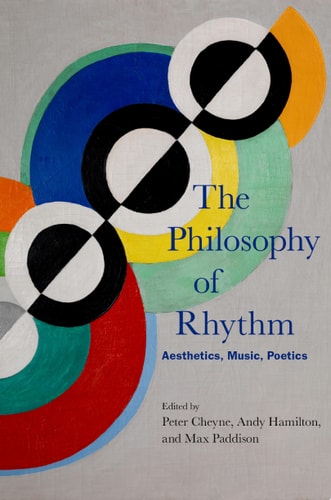
The Philosophy of Rhythm: Aesthetics, Music, Poetics
0
0
As an Amazon Associate and affiliate partner, Menrva Books earns from qualifying purchases. Learn more
Author Description
Rhythm is the fundamental pulse that animates poetry, music, and dance across all cultures. And yet the recent explosion of scholarly interest across disciplines in the aural dimensions of aesthetic experience--particularly in sociology, cultural and media theory, and literary studies--has yet to explore this fundamental category. This book furthers the discussion of rhythm beyond the discrete conceptual domains and technical vocabularies of musicology and prosody. With original essays by philosophers, psychologists, musicians, literary theorists, and ethno-musicologists, The Philosophy of Rhythm opens up wider-and plural-perspectives, examining formal affinities between the historically interconnected fields of music, dance, and poetry, while addressing key concepts such as embodiment, movement, pulse, and performance. Volume editors Peter Cheyne, Andy Hamilton, and Max Paddison bring together a range of key questions: What is the distinction between rhythm and pulse? What is the relationship between everyday embodied experience, and the specific experience of music, dance, and poetry? Can aesthetics offer an understanding of rhythm that helps inform our responses to visual and other arts, as well as music, dance, and poetry? And, what is the relation between psychological conceptions of entrainment, and the humane concept of rhythm and meter? Overall, The Philosophy of Rhythm appeals across disciplinary boundaries, providing a unique overview of a neglected aspect of aesthetic experience.
Menrva's Summary
THE THESIS
This book investigates the fundamental nature of rhythm as a cross-disciplinary aesthetic category that bridges music, poetry, and dance. Editors Peter Cheyne, Andy Hamilton, and Max Paddison curate a collection of essays from philosophers, psychologists, and musicologists to move beyond the technical silos of prosody and musicology. The volume argues that rhythm is an essential, embodied experience that requires a pluralistic framework to understand its role in human perception and artistic performance.
THE SCOPE MAP
What You Will Find
- Philosophical inquiries into the distinction between pulse and rhythm
- Analysis of the relationship between embodied movement and aesthetic experience
- Interdisciplinary perspectives on entrainment and meter
- Comparative studies across music, dance, and literary theory
Scope Limits
- The text does not provide a singular, unified definition of rhythm
- It does not focus on the technical instruction of musical performance or composition
THE AUTHORITY PERSPECTIVE
Experts recognize this volume as a significant contribution to the intersection of aesthetics and musicology, noting its success in synthesizing disparate disciplinary vocabularies. Readers frequently highlight the academic density of the prose, which serves as a foundational resource for scholars interested in the phenomenology of time and movement.
Page Count:
433
Publication Date:
2019-01-01
Publisher:
Oxford University Press
ISBN-10:
0190067926
ISBN-13:
9780190067922
Philosophy
Social Aspects
Music theory
Social Philosophy
Musicology
Poetics
Dance music
Cultural Theory
Music Technology
Music
Dance
Aesthetics
Community Tags
Similar Books